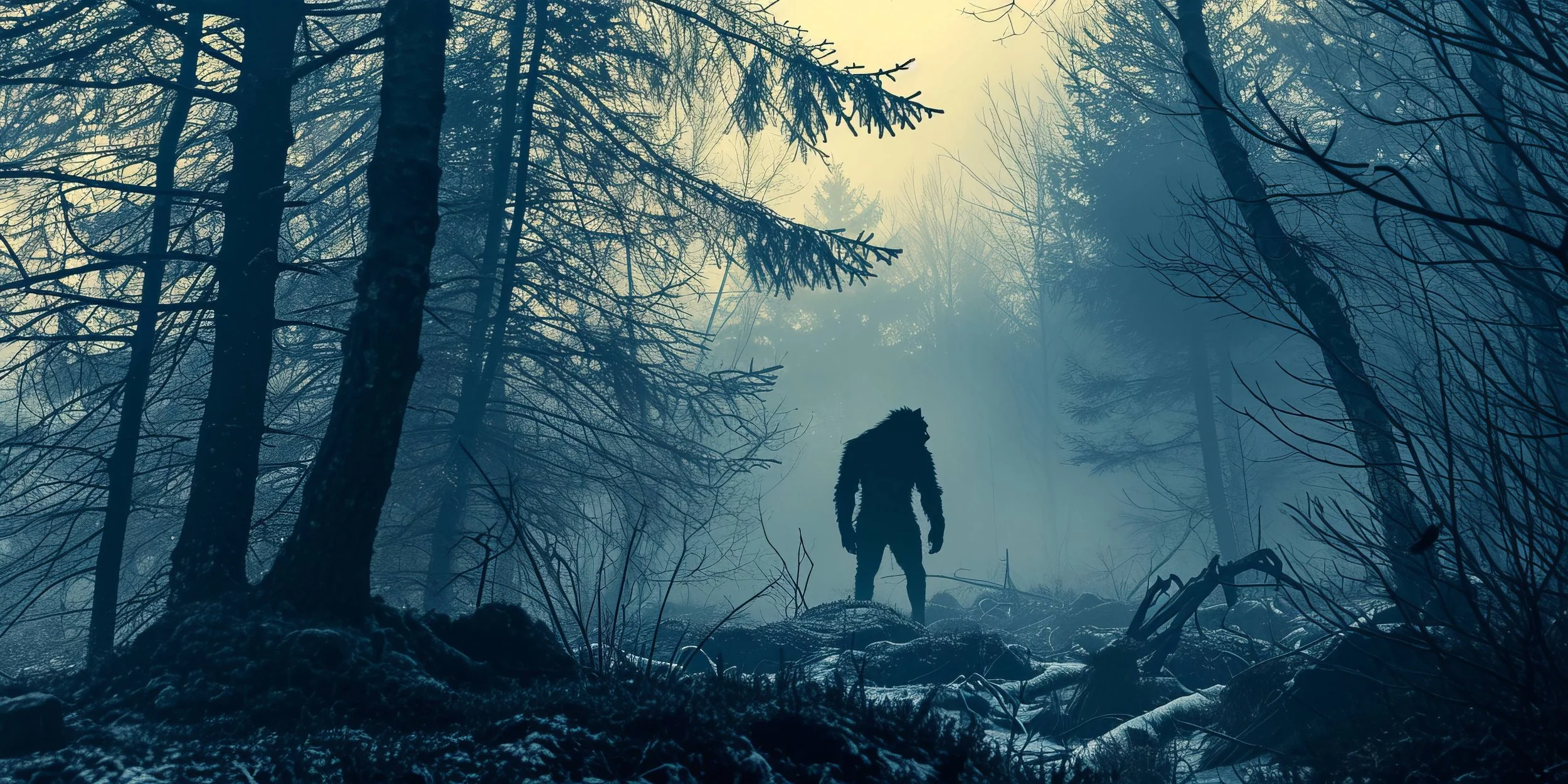
A HISTORY OF WEREWOLVES
“All civilisation has probably been a story of keeping certain impulses, emotions and urges in check, and most of these are the more primitive instincts, the animal instincts. So ever since man started becoming civilised, the werewolf has been lurking somewhere back there in the shadows”
-David J Skal
Werewolves! What are they? What do they mean? And why are they depicted in every human culture, from prehistoric times right up until the present day? To make sense of all this we will have to go on a journey, right back to the beginning, to the very dawn of human history…….
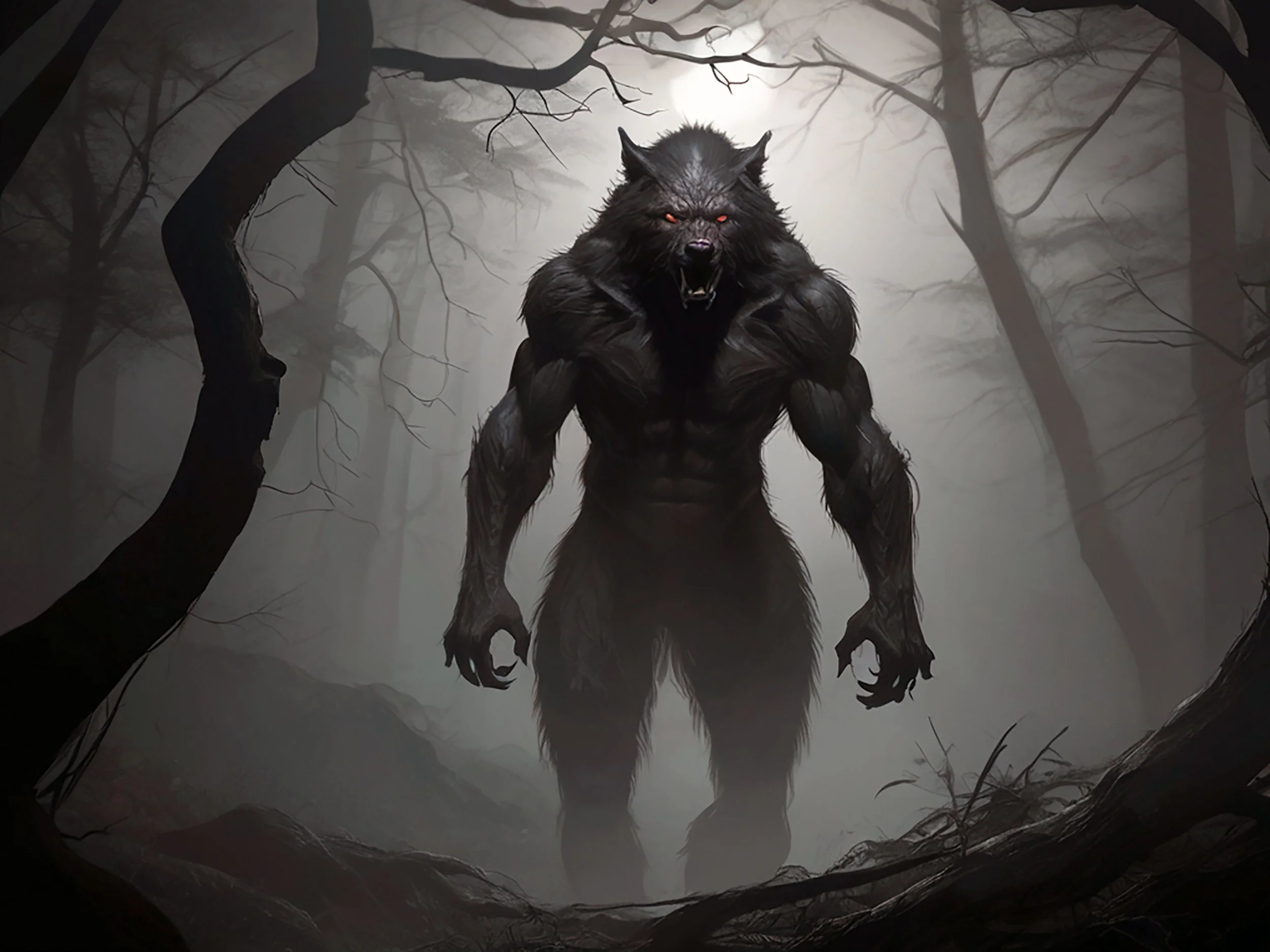
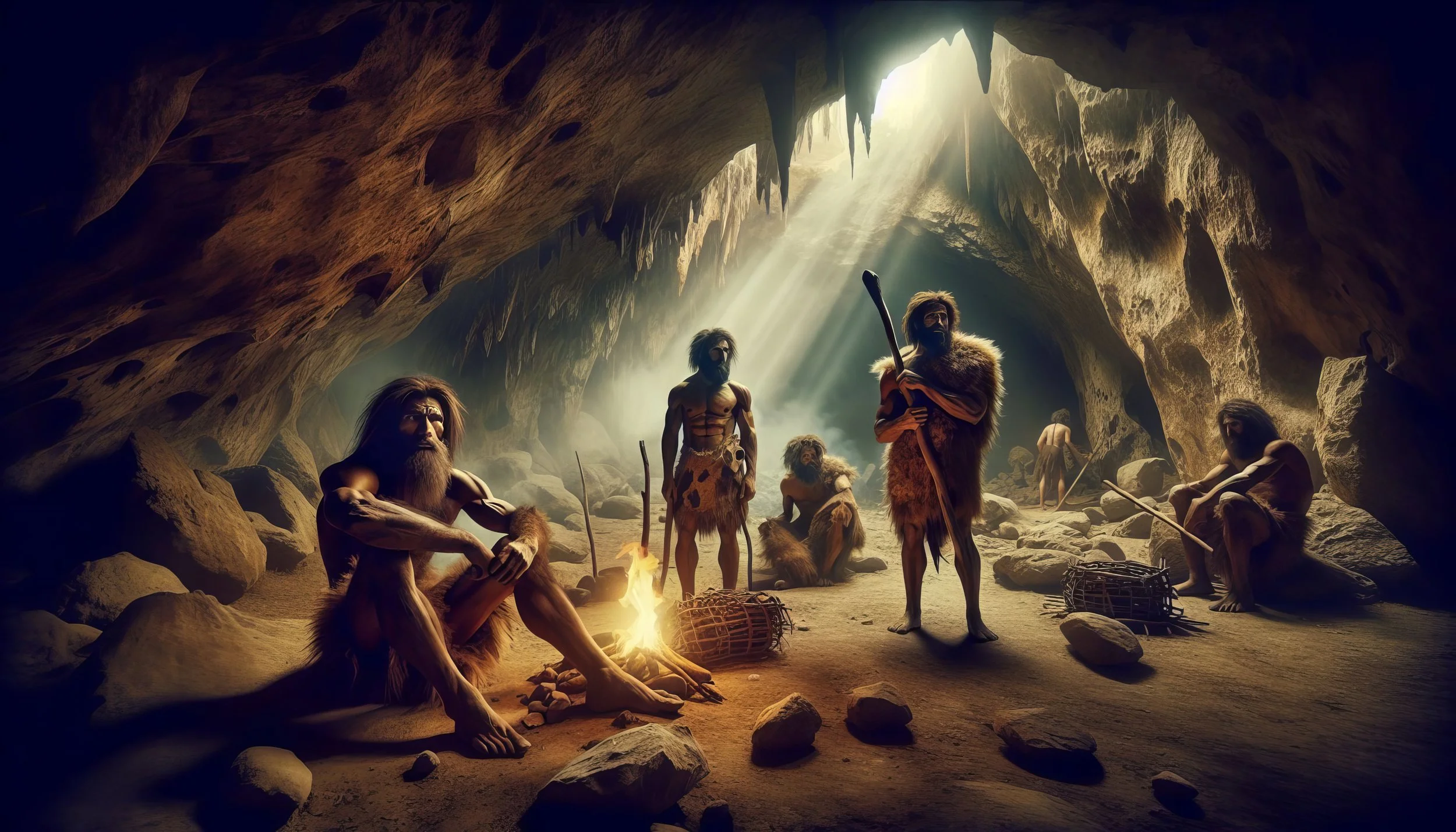
Virtually every human society contains stories of people who are able to transform from human to animal form and back again. The theme of the ‘shape shifter’ goes back to the very earliest human origins, to dimly lit prehistoric caves where ancient people painted pictures of wolf headed men on stony walls. Prehistoric man understood the power and cunning of the Wolf and by donning the wolf skin and mask in hunting rituals designed to evoke supernatural powers, he believed he could take on the spirit of the animal and be transformed.
It is theorised that by adopting these animal abilities of strength and speed, and literally taking on the wolf’s consciousness, these prehistoric people were attempting to enhance their senses and ability to hunt, and to create a special bond with the animal world. A successful hunt could mean the difference between survival or death, every sense had to be finely tuned and combined with a deep knowledge and understanding of the natural environment. For this reason these ancient humans had an intimate connection with the natural world that is largely lost to modern society.
The ability to shape shift continues on into mythology, probably the oldest known source in world literature for a human transforming into a wolf is found in the Epic of Gilgamesh, and the ancient Roman poet Ovid’s classic work ‘Metamorphoses’ is also devoted to themes of shape shifting.
In one of Ovid’s stories, Jupiter the king of the gods, descends to earth disguised as a mortal to visit the Arcadian king Lycaon. However the cruel tyrant king decides he wants to humiliate Jupiter, and he makes the decision to do this by secretly serving him human flesh, to see if he can deceive the god into eating it without noticing. He kills a young boy, chops up his body, boils the parts, and then serves them to Jupiter. Jupiter of course sees straight through the deception and as a punishment turns Lycaon into a wolf. As a result Lycaon becomes one of the first recorded werewolves, and his name is the root of the word ‘lycanthrope’ meaning one who transforms into a wolf.
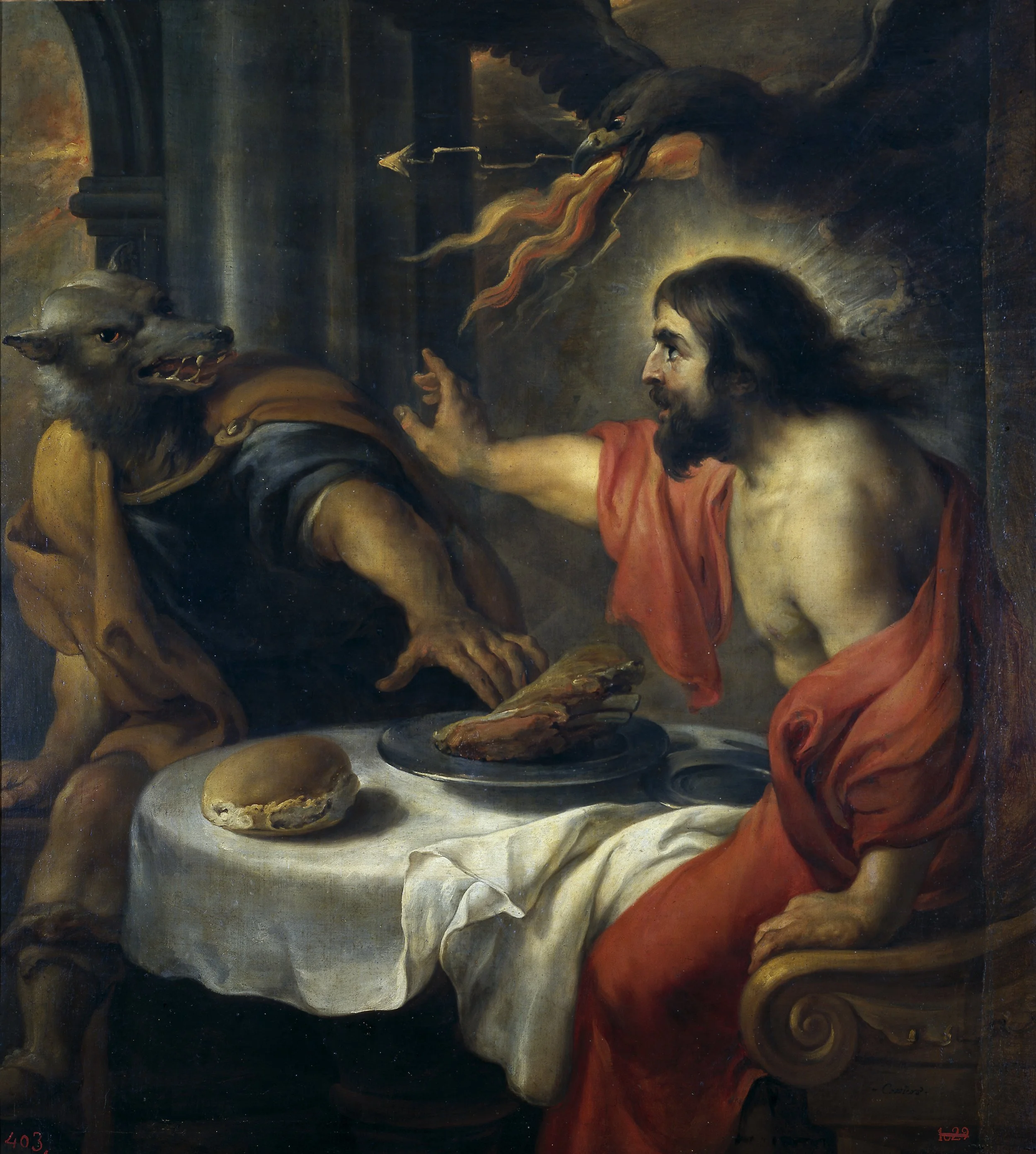
Jupiter and Lycaon - Jan Cossiers [1636-8]
In the 5th century, the ancient Greek historian Herodotus, often referred to as the ‘father of history’, also writes of werewolves and tells of a nomadic tribe of shapeshifting men called the Neurians, who would transform into werewolves once a year for several days, before resuming human form.
The ability to shape shift was not just confined to the ancient Romans and Greeks, Native American Indian culture also contains many shape shifters and Werewolves. The Navajo tribe referred to such shifters as ‘Skin walkers’. They were said to have large glowing eyes, even in daylight, and if a person looked directly into their eyes, the Skinwalker could absorb them and ‘steal their skin'. Apparently they could take on many different animal forms such as owls, crows and coyotes…. but the most common was the wolf! A Skinwalkers tongue was said to be black to show the darkness of it’s soul, and they were known to lure people away from their homes and into the woods by imitating the voices of their loved ones.
In addition to this there is also the Hopi Indian shapeshifting tradition, in which wearing the skin of an animal during a sacred ceremony allows the participant to turn into the animal he or she wishes to become.
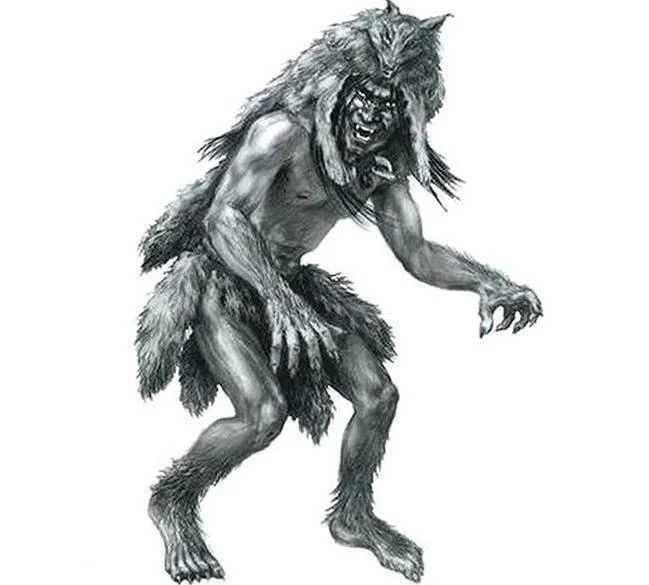
A Native American ‘Skinwalker’
Interestingly the Vikings also claimed this shapeshifting ability. The Viking warriors known as the ‘Berserkr’ would put on wolf or bear skins and work themselves into an animalistic frenzy before going into battle. ‘Berserkr’ which literally means ‘the ones who wear bear shirts’, is the root of the word ‘berserk’.
There were also a group of berserkers known as the Ulfheðnar, referred to as ‘wolf warriors’ because they chose to wear the skins of wolves. By taking on the spirit of the the bear or the wolf, the viking ‘berserkers’ acted as if they were no longer human. They were known for being completely fearless, losing all control in battle, and committing random acts of animalistic savagery.
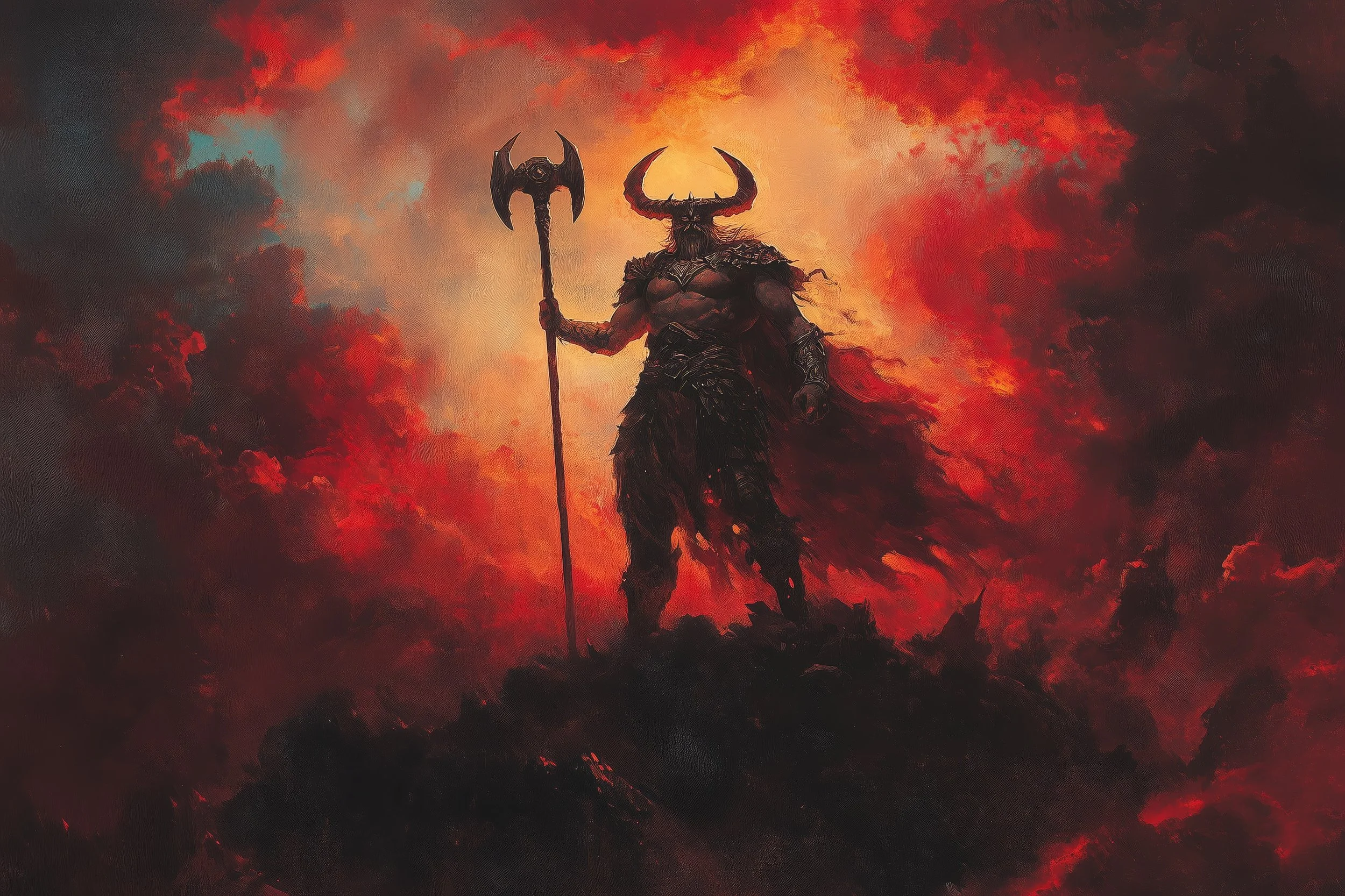
The earliest surviving reference to the term berserker is in Haraldskvaeoi a skaldic poem composed by Thorbiorn Hornklofi in the late 9th century-
“I'll ask of the berserks, you tasters of blood,
Those intrepid heroes, how are they treated,
Those who wade out into battle?
Wolf-skinned they are called. In battle
They bear bloody shields.
Red with blood are their spears when they come to fight.
They form a closed group.
The prince in his wisdom puts trust in such men
Who hack through enemy shields.”
In fact it turns out ‘Wolf warriors’ commonly appear throughout legends of the many indo-European peoples, from the Turks and the Monguls to the Native Americans.
Moving on to Europe in the middle ages, as Christianity began to expand and spread, the ability to shape shift came to be seen as a sin and a form of blasphemy against God, from the 1400’s up until the late 1700’s witchcraft hysteria spread across Europe and there were many witch trials initiated by the church. Life was hard and it was the peasants who mostly bore the brunt of the poverty, disease and famine that affected Europe. In this time of desperation and struggle scapegoats were needed, witchcraft was blamed for most of society’s ills, and a great societal purge began.
What is less well known is that during this period there were also a large quantity of werewolf trials and many unfortunate people were tortured into confessing and then burnt alive. In fact in this era there was not a huge amount of distinction between the witch and the werewolf, as witches were also considered to be able to transform into werewolves. So if you were an unfortunate peasant up against the church inquisitors, it didn’t matter if you were a man or a woman, either way you were probably going to fry!
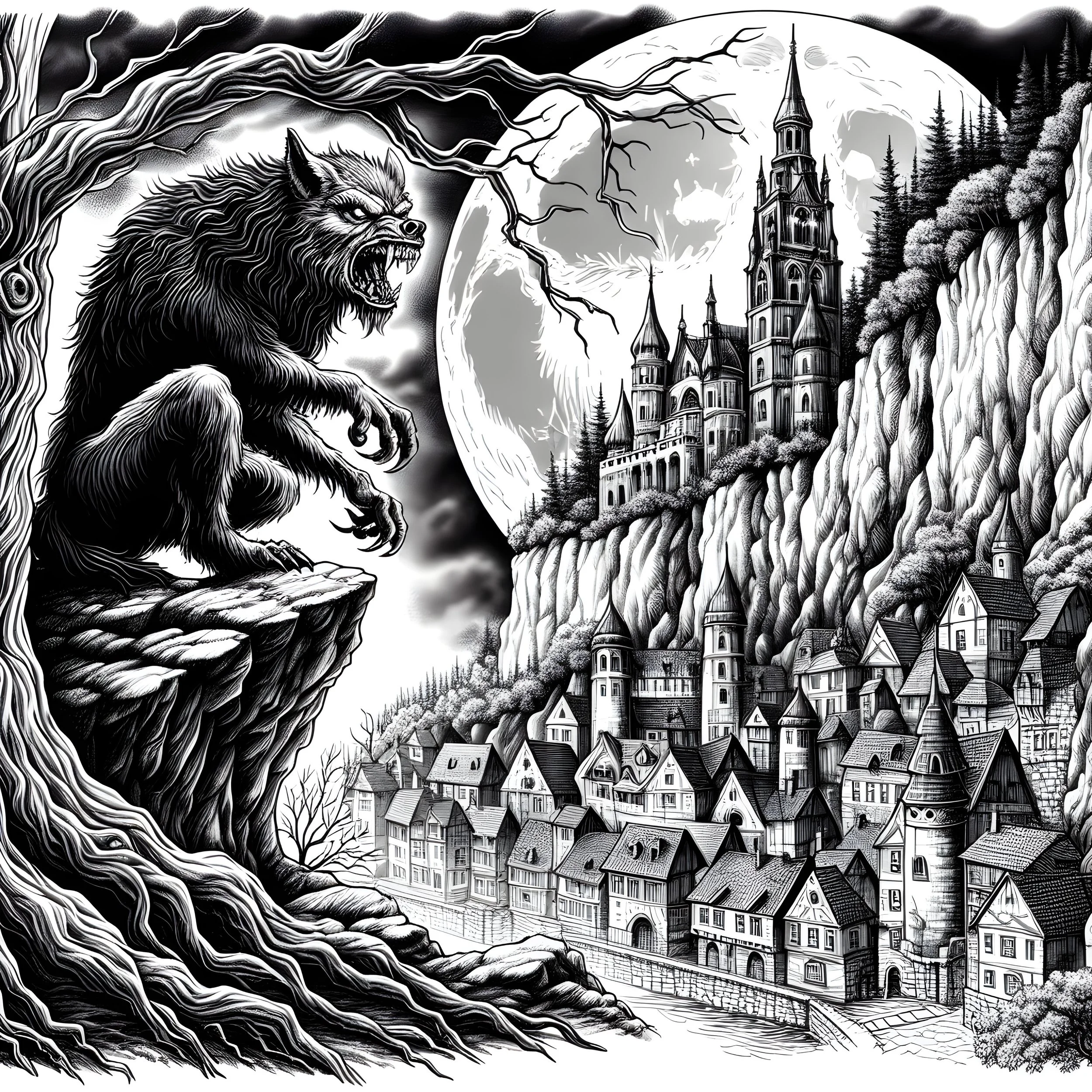
The werewolf also gradually evolved through European folklore and superstition, there was the commonly held folk belief that the seventh son of a seventh son would be cursed by becoming a werewolf. Another common idea was that people became werewolves after making a pact with the devil. Werewolves were also believed to have hair growing out of the palms of their hands, as well as eyebrows that meet in the middle.
The fear of wolf attacks was a common part of peasant life in medieval Europe, and so unsurprisingly even ended up creeping into children’s stories, perhaps as a form of cautionary warning. Little Red Riding hood as featured in the tales collected by the brothers Grimm is certainly one of the most werewolf themed stories. Angela Carter’s brilliant adult retelling of classic folktales ‘The Bloody Chamber’ capitalised on this underlying theme, as did the film version ‘The Company of Wolves’ directed by Neil Jordan.

Angela Carter's collection of short stories ‘The Bloody Chamber’- [1979]
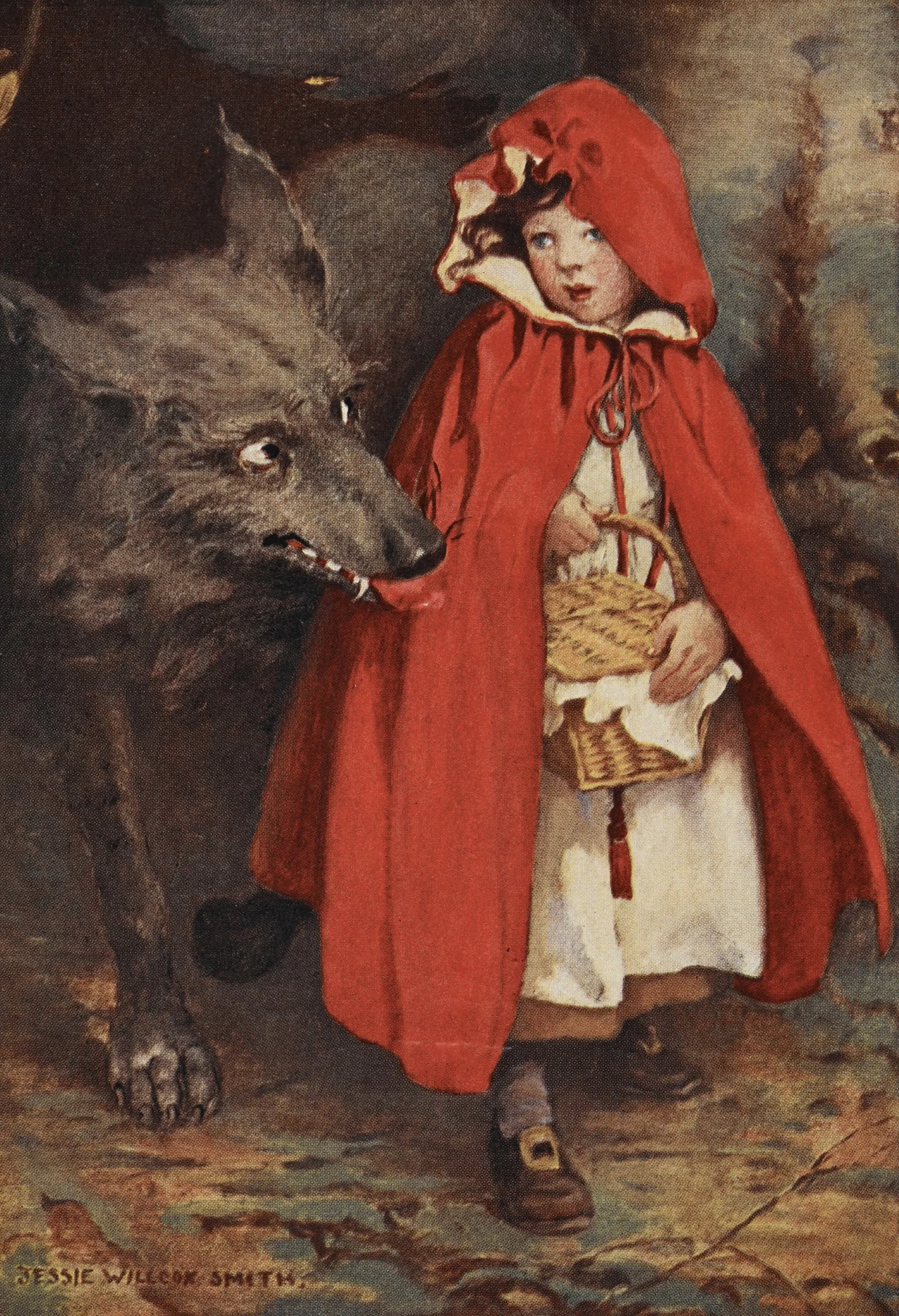
Little red Riding Hood- illustrated by Jessie Willcox Smith [1910]
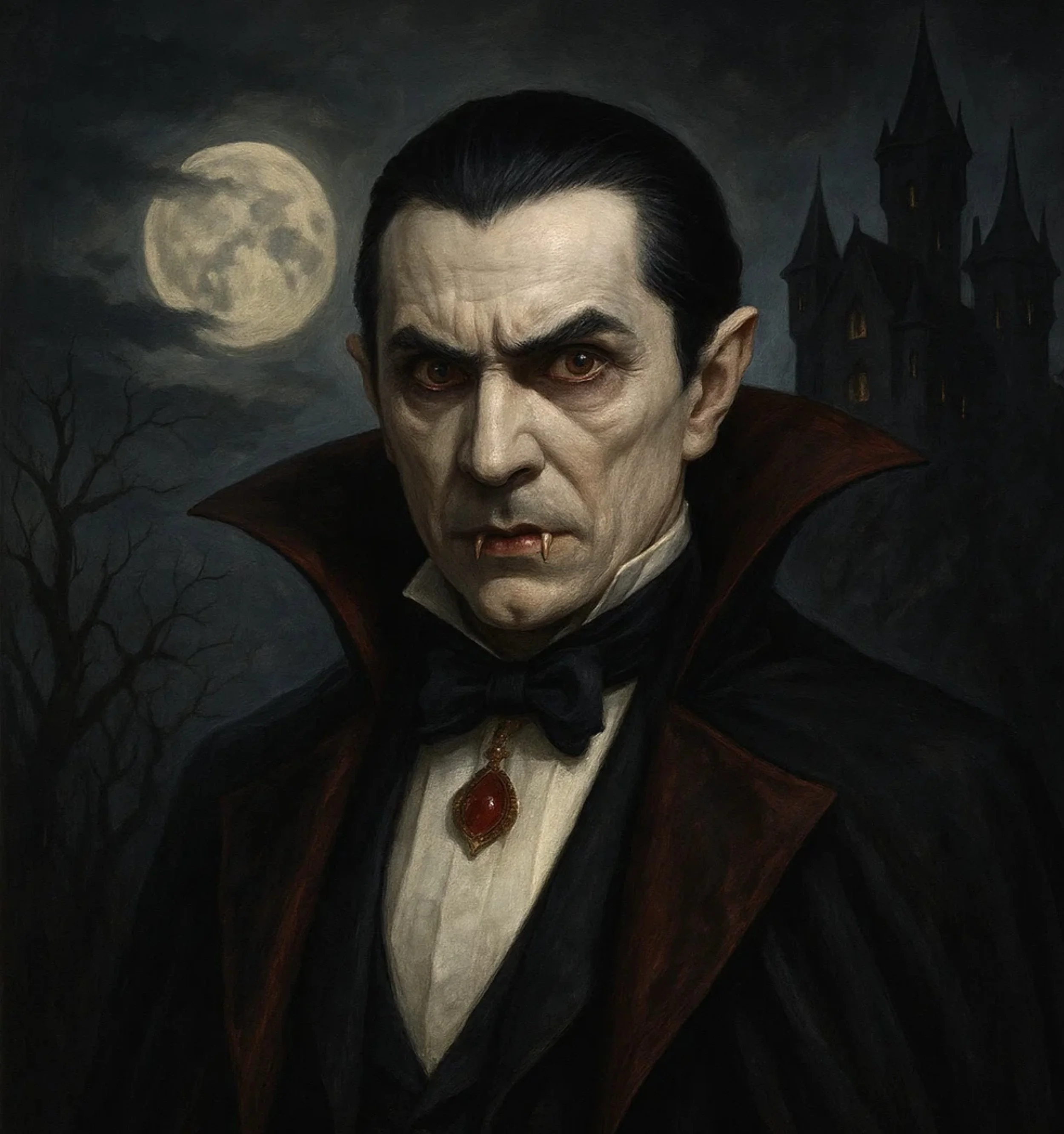
In Germanic folklore, from about the 17th century onwards the idea that werewolves are vulnerable to silver weapons also began to appear, and in the 19th century novel Dracula, Bram Stoker depicts Dracula as being able to change into a wolf at will during the night. Dracula also hints early on in the novel that his Romanian ‘Szekely’ bloodline were able to transform into werewolves.
In addition to this, throughout the centuries, there have been many werewolf serial killers, In 1589 Peter Stumpp known as ‘The Werewolf of Bedburg’ was tried for ‘werewolfery, witchcraft and cannibalism’ and eventually executed. He confessed to being a werewolf and explained the devil had given him a magical belt or girdle that allowed him to transform into a wolf. Stumpp confessed to killing and eating 14 children and 2 pregnant women, whose fetuses he tore from their wombs and then consumed, describing them as ‘dainty morsels’. He also allegedly ate the brain of his own son.
There is also Manuel Blanco Romasanta considered to be Spains first serial killer. At his trial in 1853, Romasanta claimed that he had been cursed to transform into a werewolf and would go on killing sprees for several days before returning to human form. The court asked him to prove it by turning himself into a werewolf before them, but he explained that the curse lasted for 13 years, and had just expired the previous week.
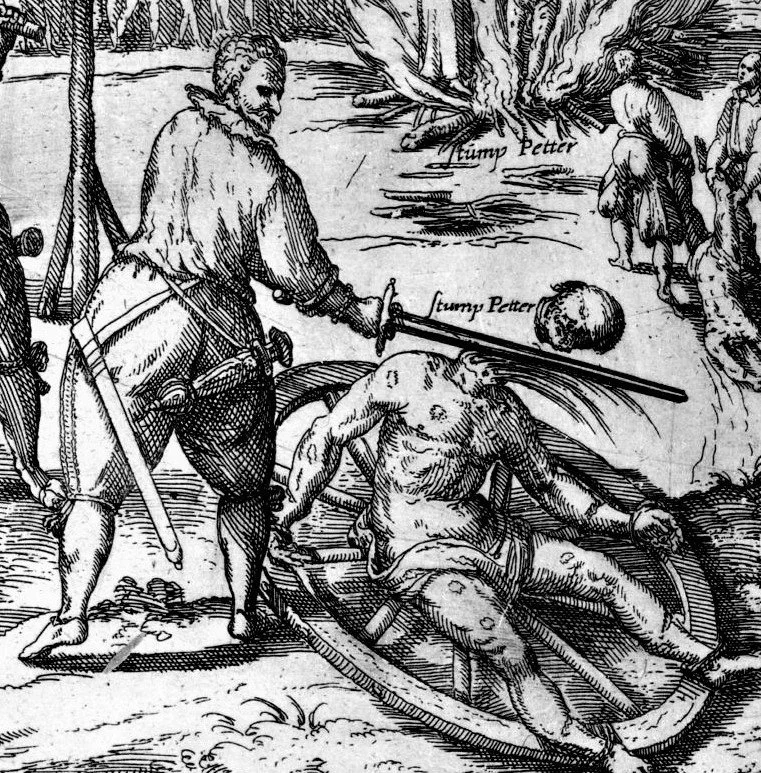
A wood cut depicting the execution of Peter Stump- ‘The Werewolf of Bedburg’
Moving on to the 20th and 21st-century, it turns out our modern conceptions of the werewolf, although owing a certain amount to folklore, have largely been shaped by Hollywood movies. Ideas such as a werewolf transforming at the full moon, the use of silver bullets to kill a werewolf, and that being bitten by a werewolf meant you’d turn in to one, had appeared somewhat inconsistently before in earlier forms, but it was the 1941 movie ‘The Wolf Man’ starring Lon Chaney that finally codified these concepts, and layed down what has become modern werewolf lore.
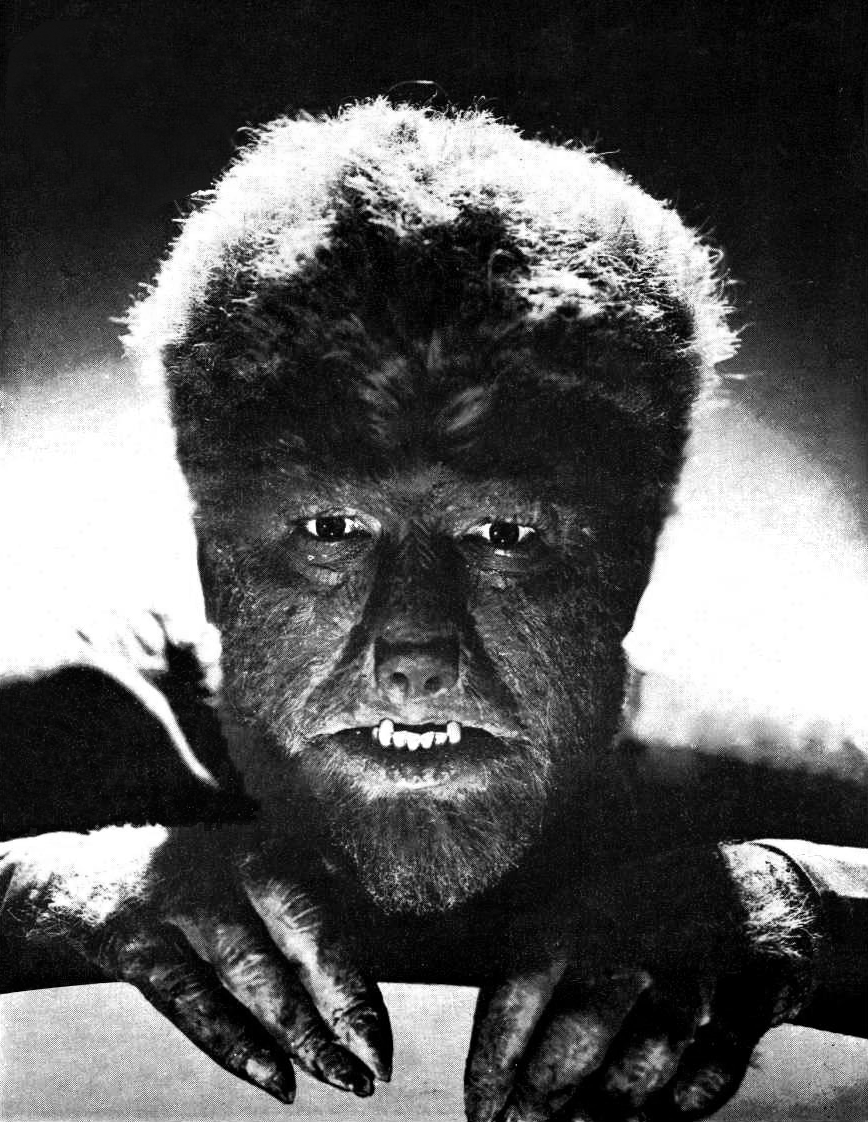
Lon Cheney in the Wolfman
Other more modern explanations for the werewolf phenomenon include the psychiatric condition ‘clinical lycanthropy’, a rare form of psychosis in which the patient believes they are actually transforming into a wolf. There is also the rare genetic condition ‘porphyria’, in which symptoms include mental disturbances and extreme sensitivity to sunlight.
In addition there is the medical condition ‘hypertrichosis’ sometimes referred to as ‘werewolf syndrome’ where the entire body surface is completely covered in hair. The 16th century spanish nobleman Petrus Gonsalves famously suffered from the condition as did several of his children who are all depicted in portraits. There is also a theory that the marriage between Petrus Gonsalvus and Lady Catherine may have been part of the inspiration for the fairy tale ‘Beauty and the beast’.

Petrus Gonsalves and Lady Catherine
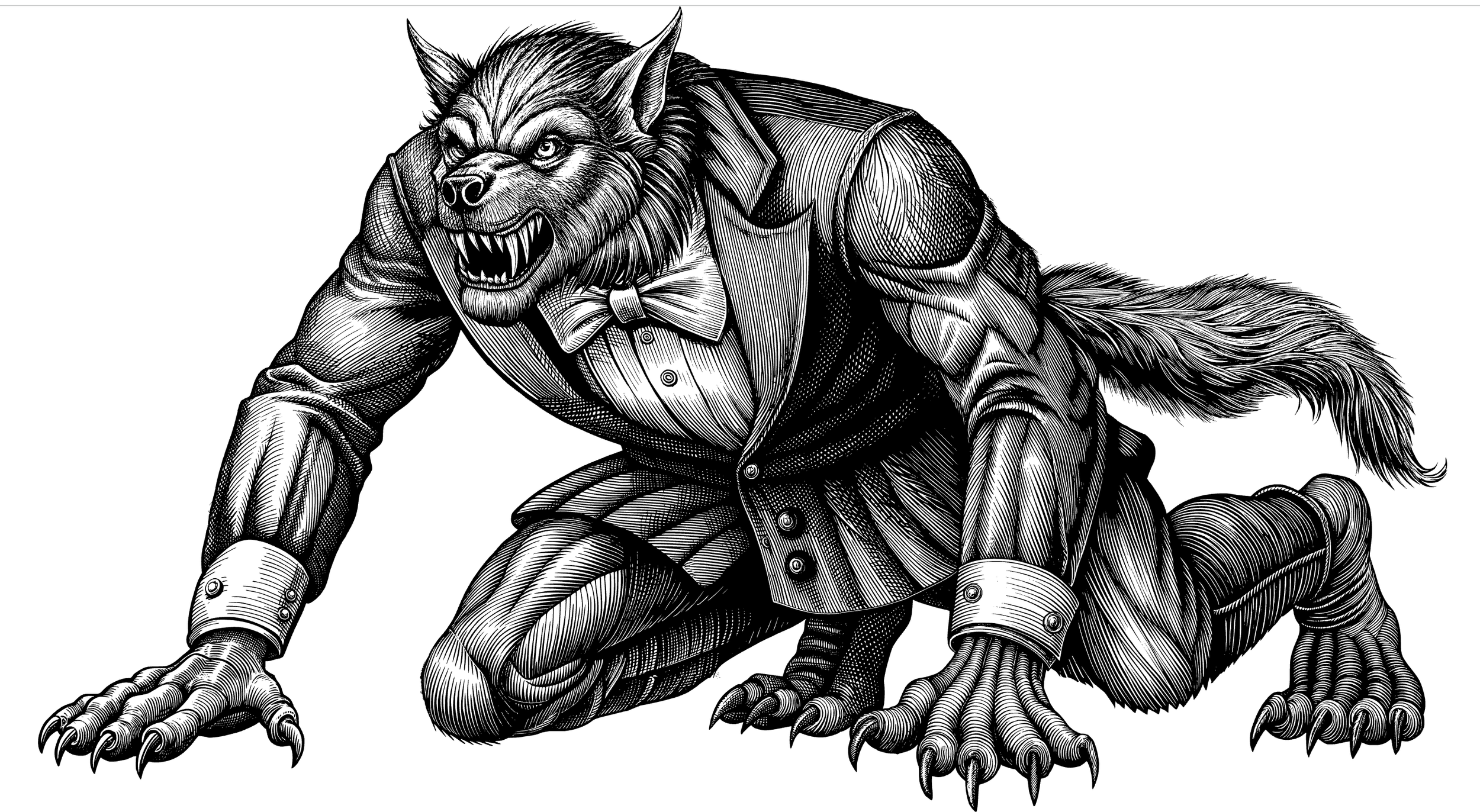

So now we’ve covered the history, the question still remains, why is it that we humans are still so fascinated by werewolves, from ancient cave paintings right up to the splatter and gore of modern werewolf movies?.
It may be that for some, this stems from the simple fantastical desire to take on the superior strength, speed and freedom of a wild animal, qualities that we humans desire but do not posses in such abundance.
Conversely it may also be the need for werewolves stems from civilised man’s unwillingness to accept the animal side of his nature, particularly when faced with the senseless savagery that some humans are capable of, the acts of murder, torture, infanticide, and so on that are tragically found in every period of human history. Could it be that throughout the ages, when confronted by the complexity of human behaviour, people have found it easier to create a supernatural explanation instead? A creature that can be blamed for the atrocities of man, a creature that is part human, part savage beast, and motivated by evil and destruction.
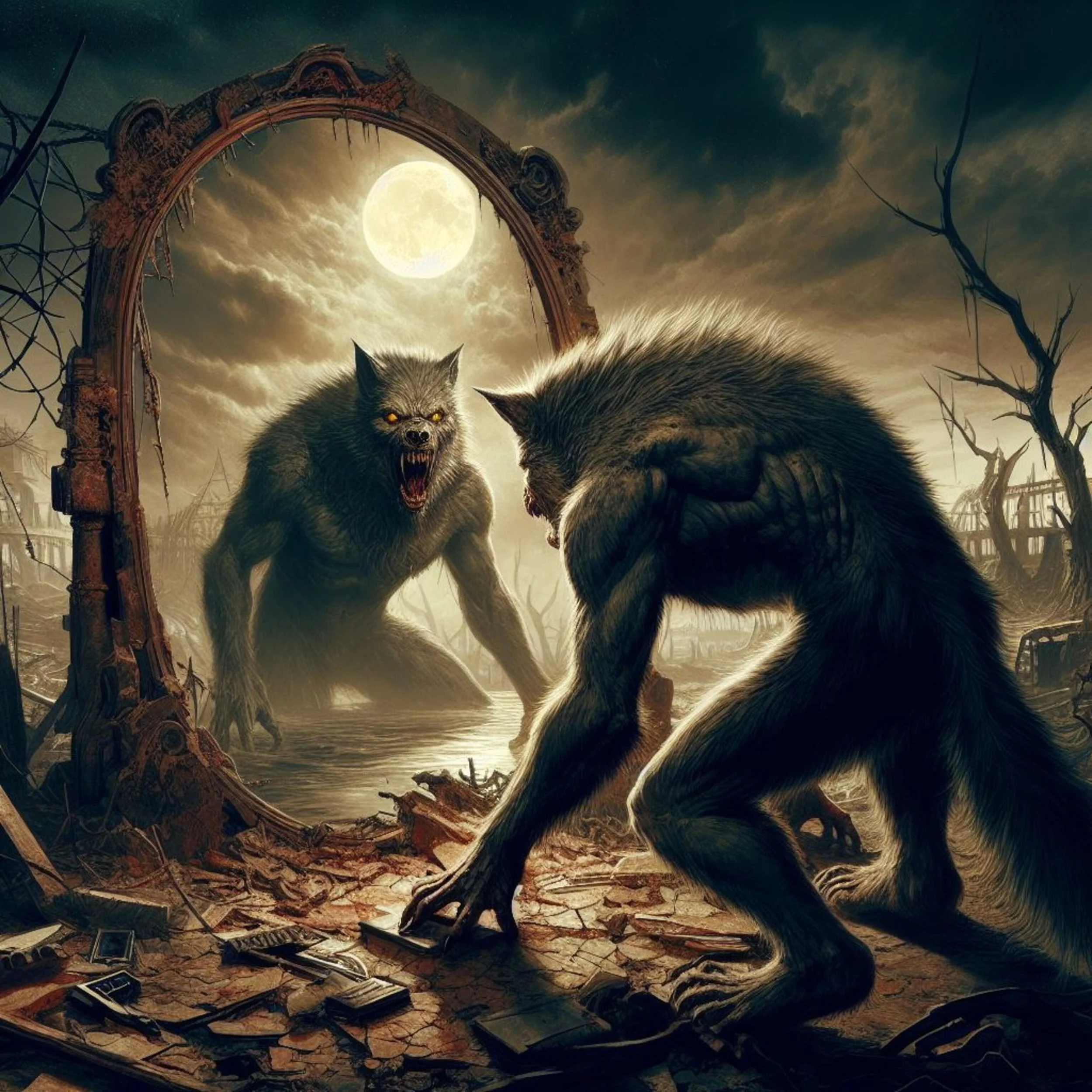
There are after all many modern thinkers who have held a very bleak view of human nature, and concluded we think a bit to highly of our selves as civilised creatures. The dystopian science fiction author JG Ballard famously said of his books-
“I wanted to rub humanities face in its own vomit and force it to look in the mirror” .
Freud also viewed the basic fundamental drives of humans as being self interest, sex and aggression.
More modern thinkers such as the neuroscientist and primatologist Robert Sapolsky view human nature in far more complex and less simplistic terms, in Sapolsky’s view humans are cooperative, reciprocal, and capable of altruism, but given the right set of circumstances also equally capable of committing savagery, atrocities and genocide.
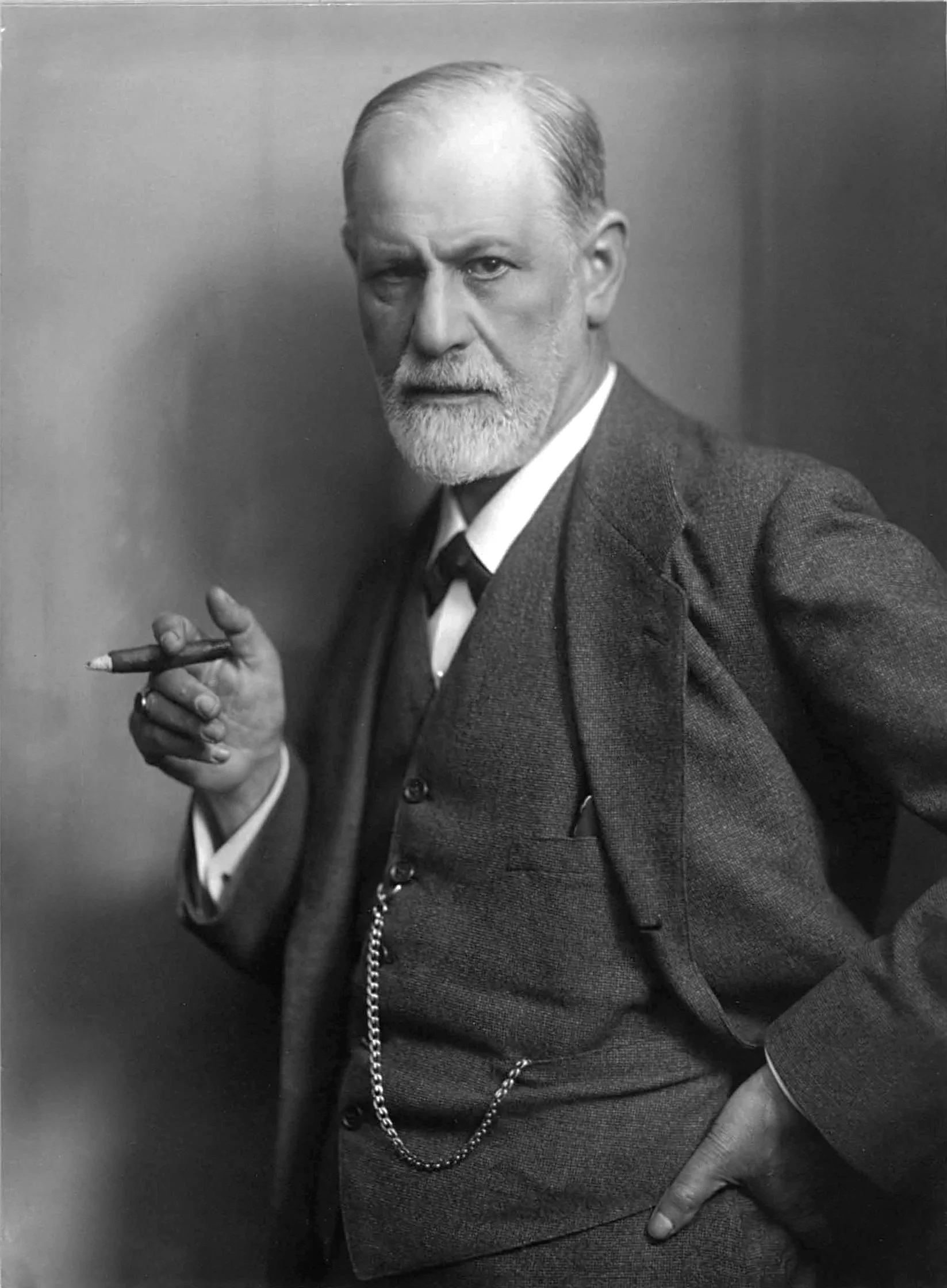
Sigmund Freud
There is also a particular kind of human present in every population who is not capable of empathy and altruism. Robert Hare one of the world’s leading experts on psychopathy has stated that Psychopaths represent approximately 1- 4 % of the human population and move freely among us. These individuals with extraordinarily low, or even zero empathy, are viewed by Hare as a kind of ‘interspecies predator’. Kevin Dutton a professor of psychology at Oxford university believes one of the reasons psychopath genes have survived is that they are useful to human populations, particularly when it comes to tasks like fighting wars. Dutton has spoken of a theory that viking Berserker’s may have in fact been selected from the psychopaths among the viking population.
ANIMISM, PRE CIVILISATION, AND THE HUMAN NERVOUS SYSTEM -
There is also another way of looking at the werewolf question. The werewolf does not necessarily have to be viewed as a metaphor for evil, it can also be viewed as having the potential for good, or even as a metaphor for a creature that transcends both good and evil, and is therefore a true representation of the forces of nature. It is after all very hard to apply the moral codes of mankind to natural events, when a lion kills is it evil, Is an earthquake, a flood or a tsunami evil? Natural events kill and reap destruction, but they do not have evil intent? Those are human constructs and values.
This is a viewpoint that takes us right back to where we started, long before the dominance of monotheistic religions, back into prehistory and pre-civilisation.
If we examine our history as a species, human religious evolution can be split into four distinct phases -
Phase 1 - Animism
The vast majority of evolutionary and anthropological research suggest that before civilisation most human cultures held an ‘animist’ view of reality. Most animistic religions take the position that everything that exists in nature, animals, rivers, mountains, trees , rocks etc, are infused with some kind of deity or spirit.
In many ways these animistic beliefs can be interpreted as deeply ecological, as within this belief system humankind does not operate in a state of dominance over nature, but instead lives with a deep reverance for nature. Pre-civilised hunter-gatherer societies did not generally believe in grand, distant, or all-powerful "gods" ruling from the heavens. Instead, the gods or spirits were all around them as part of everyday life. rather than seeing a tree as an inanimate object occupied by a separate spirit, early humans viewed the tree itself as a non-human person with its own intelligence, desires, and social role. You are after all, much less likely to chop down a tree without good reason, if you believe that is infused with a spirit.
It is likely that these ancient cultures did not have a separate category called "religion" - Interacting with the spirit of a river or an animal or a particular place, was treated as a practical, everyday relationship—similar to interacting with a human neighbour from a neighbouring tribe. It’s perhaps not surprising that to these ancient people the concept of shapeshifting seemed completely natural. For example - images of the ancient Celtic God Cernunnos, commonly appear as a man with horns growing out of his head - this natural combination of both the animal and the human, or the ability to shift between being an animal and a human, seems to metaphorically embody the deep connection between humans and the natural world during this period.
Many psychologists and anthropologists have suggested that animism may actually be the default setting of human cognition and the human nervous system. As I mentioned at the beginning of this essay, early humans survived by being hyper aware of their surroundings and being deeply in tune with every nuance of their natural environment. This hyperactive awareness, or ‘cognitive bias’ of humans, to project their intent, mind, and spirit onto the entire natural landscape, which included taking on animal consciousness, was in fact an evolutionary advantage for their survival.
I should add, it’s important not to fall into the trap of romanticising the animist beliefs of these ancient peoples, as if they were living in some sort of perfect utopian harmony with nature. There is also evidence of animist hunter gatherer communities sometimes overhunting and wiping out entire species, and altering and damaging their environment over time. However, the animist belief system may well act as a better container or ‘brake system’ to mitigate the complete environmental destruction that we see driven by modern human belief systems and technologies.
Phase 2 - Polytheism
The second phase in human religious development is the move from animism to polytheism. As humans transitioned from a hunter gatherer existence to agriculture, their relationship with nature shifted, instead of living with nature as an equal, human beings began to try and dominate and control nature though farming and irrigation, and as human society evolved into hierarchies with kings and chiefs, their spiritual world began to reflect this change.
This change towards hierarchy was not immediate, for several millennia after people began experimenting with farming and building permanent settlements, they initially lived in large, complex communities, without centralised rulers. Even as cities began to grow, humans successfully resisted permanent ‘top down’ rule from oppressive elites, and human society historically oscillated between different forms of authority and freedom. However, over several thousand years, the Democratic spirits of animism and the gods of early civilisation gradually began to erode. Eventually transforming into the powerful hierarchical polytheistic gods of the first dynastic monarchy states of western civilisation that appeared in Egypt, Mesopotamia and ancient Greece. The gods were no longer embedded in the natural world all around us, but instead they now ruled over nature from above.
Phase 3 - Monotheism
Then along came the third phase- monotheistic religion. Slowly the gods were abandoned and mankind shifted to the idea of ‘The One God’, an all powerful deity who was located somewhere above us in the sky. This concept of a sole male paternalistic ‘sky-god’ was a shift away from the pluralistic, polytheistic beliefs of pagan Europe which featured powerful gods and goddesses of both sexes. The male sky God also informed us that we were now in charge of the planet and permitted to rule over it as custodians. It seems we were no longer part of nature, but were promoted to being in charge of nature - a significant shift.
Pre civilisation animist relgions also often include the concept of a creator ‘sky god’, but this god functions differently to monotheism. Once creation is finished, this sky entity typically withdraws into the heavens and becomes distant, inactive, and largely unconcerned with day-to-day human affairs. By contrast, in monotheistic religion, the sky God watches over human behavior, enforces laws, and demands moral obedience, sacrifice and worship.
It is also interesting that during this period of monotheistic religious expansion, as Christian theology slowly began to spread through Europe, pagan religions were gradually repressed or extinguished, and the concept of the shape shifter stopped being viewed as something positive or beneficial, and instead became associated with evil and was outlawed. In a metaphorical and literal sense, our deep connection to nature and the animal part of ourselves, was being gradually eroded.
Phase 4 - Modern secular society
It is at this point that the fourth and final phase emerges- our complete separation from nature. We arrive in modern secular civilisation, along the way we have transitioned from believing in many gods, to believing in one God, to now potentially discarding religion, and believing we ourselves are God. We have now exerted some degree of dominanace and control over nature, we are not answerable to any God or gods, and we have the ability to bend the natural world to our will with modern scientific technologies. The problem is once again, in metaphorical and literal terms, we do not appear to have the wisdom of gods, or the ability to manage such technologies responsibly, so as a result, we appear to be sowing the seeds of our own destruction.
According to the psychologist Carl Jung, the terrifying monsters and Demons we encounter in our nightmares, dreams, and waking fears, are almost always the rejected, unrecognised and repressed parts of ourselves. The more we repress them, the more monstrous they become.
Jung claimed the moment you begin to consciously confront, understand and integrate these internal forces, their demonic or dangerous power diminishes.
The witches and werewolves of our collective imagination may not be as evil as we think - is it possible that because they have been oppressed by monotheistic and secular culture, and pushed deeper into the darkest recesses of the human collective unconscious, they necessarily became more demonic?
Is civilised man ultimately a kind of domesticated animal, who lives a safer, more comfortable, but somehow more disconnected and flatter existence? Have we traded what could be a much more dangerous, but uitmately wilder, richer and more fulfilling sensory experience, for the flattened comfort of civilisation?
Perhaps the werewolf, the animistic shapeshifter, is truly the shadow side of civilisation, a side that reflects these anxieties, the animal part of us that longs to reconnect with nature, and mourns the loss we may have inflicted upon ourselves. Could this be why the werewolf keeps appearing again and again in modern horror movies? Because we have so deeply repressed and banished him from the light of consciousness, the more he has evolved into a monstrosity, and is now howling for our attention. He explodes from the darkness and the shadows with his teeth and claws bared, dripping with blood, asking why we have rejected and abandoned him?
‘ I want to isolate myself in the clean, stark beauty of nature… to face the stark, terrifying reality of my own mind without the buffer of society’
- Sylvia Plath, the unabridged journals
The Fear of Nature
The city is a human made environment, we have built walls, roads, concrete pavements, and schedules to keep nature out, and tame the unpredictably of the world. Nature by contrast is indifferent to human concerns, it is wild, chaotic, beautiful, unpredictable, and sometimes terrifying. When we stand alone in nature, stripped of all the busyness and distractions of the city, we are forced to confront ourselves, it is a mirror reflecting back to us our wilder impulses, our human fragility and our smallness in the grand scheme of things - the momentary realisation of a tiny human self, surrounded by the vastness and enormity of the natural world.
For some, the wildness of nature can feel threatening, it strips away the illusion of control , the distractions that allow us to hide from our inner selves, the controlled world of our city identities defined by surface realities of career, social status and constant stimulation.
The daily city experiences of noisy traffic, social interaction, and navigating the rat race, all leave very little space for introspection. The busyness of the city provides a ready-made ego reinforcement for this external ‘surface’ self, functioning as a kind of psychological defence mechanism, an avoidant distraction. When you remove this, the mind naturally switches to a calmer less external and more internal mode of operating. When lose yourself in nature, when the mind ceases to be occupied by the external, the surface ego structure can start to feel fragile. This unique experience of being left entirely alone with our own thoughts, can sometimes force a confrontation with inner self, the self that lies beneath the roles we play in city life.
For some this is terrifying, for others it is liberating. The twenty four hour bright lights of the city can allow us to hide from our shadow, but at the cost of ignoring all the contradictory parts of our inner selves, that make us fully human. Carl Jung frequently wrote about how his isolated rustic retreat ‘Bollingen’ helped him to achieve many of his key realisations-
"Your vision will become clear only when you can look into your own heart. Who looks outside, dreams; who looks inside, awakes.”
For some silence is not peaceful, it is deafening and terrifying, but it is in silence that the great existential questions reside, it is in silence that we often find the answers to the deepest questions about ourselves, and it is by slowing down and listening, that we are able to tune in to those deepest parts of our being.
THE NEUROSCIENCE-
There is an emerging body of neuroscientific evidence that supports the enormous benefits of spending time in nature. The human brain has an operating system called the ‘default mode network’, which is often compared to the concept of the ‘The Ego’. It plays a role in organising memories and self focused thoughts, it asks the ‘what if’ questions by helping you to imagine future events and explore their potential consequences. The DMN allowed our ancestors to envisage future hunting scenarios, anticipate shifts in the seasons and food availability, and negiotiate complex social dynamics. Unfortunately, the DMN is also linked to several mental health conditions - over-activation of the DMN is often associated with the repetitive negative thinking, anxiety, and rumination seen in depression.
There are ways to influence the functioning of the DMN, for example meditation deactivates and slows it down so it fades into the background. However, spending time in nature has a slightly different effect, it appears to ‘balance’ the DMN. Natures gentle unpredictable stimuli captivate our attention effortlessly. This phenomenon is often described in psychology as ‘soft fascination’.
In a pre-civilized state the brain was rarely in the "bored" or "depressed" states often triggered by modern sedentary life. Because of the rich complexity of nature as compared to the flatness of civilisation, the hunter gather brain in nature was constantly experiencing a low-level state of ‘stimulated fascination’, a relaxed but alert awareness of the environment, which is highly restorative. Today, our DMN often spirals into unhealthy self-criticism because we lack the external, environmental stimulation that once allowed it to function in a more restorative and balanced state, the DMN can end up becoming too ‘internally’ focused as opposed to operating in a state of gentle balance between both ‘external’ and ‘internal’ processing. The DMN in nature stops being a source of "mental noise" or repetitive worry, and instead shifts into a mode that supports emotional recovery and cognitive restoration.
The other profound difference in "brain function" in the modern world is how we experience stress. The hunter gather brain was designed for ‘acute stress’ - a sudden threat like a predator triggered an immediate fight flight response, but after this the nervous system would calm down. However modern civilised humans experience ‘chronic stress’ - the overstimulating experience of civilised life, with it’s 24 hour media, noisy traffic, loud sirens and busy streets, all result in our brains threat systems being in a permanent state of arousal. The human brain has not evolved for about 40,000 years, so we are essentially still using Hunter gather software to negotiate modern civilisation. Civilisation is a relatively new experience in human history - it has only been around for approximately 6000 years. Our brains have simply not evolved to manage this new environment so as a result we experience high levels of cognitive overload.
So to summarise - when you feel "unplugged" or "rejuvenated" by spending time in nature, it is because you are essentially providing your brain with the inputs it was evolutionarily designed to process, allowing those ancient neural networks to function as they were intended. Because the natural environment can help to quieten the ego and the DMN, creating a kind of regulatory balance in the nervous system - this shift gives you a better chance to safely process deep emotions and stress, turning an initial confrontation with your inner self into a state of psychological clarity, resilience, and resolution.
Many writers, philosophers, and naturalists have written about the tendency of humans, to project their mind and internal world onto the entire natural landscape, and how this process of entering the wildness of nature can allow the masks that shield us from our selves to disappear. In his brilliant book ‘Mountains of The Mind’ Robert McFarlane says the following-
‘Mountains, like oceans, have a way of drawing out our inner silence. We don't just climb them to look down, we climb them to look at ourselves, though we are often terrified by what that stillness reveals’
In his book ‘Desert Solitaire’ Edward Abbey offers a similar sentiment-
‘The desert is a mirror. When you look into it, you don't see cacti or sand; you see yourself. And if you're empty inside, the desert will show you that emptiness’
Do we dare to leave our city selves and enter the wild places? There may be danger, but also the promise of freedom. WH Auden captures this feeling brilliantly in his poem ‘In Praise of Limestone’. -
“But the really reckless were fetched
By an older colder voice, the oceanic whisper:
I am the solitude that asks and promises nothing;
That is how I shall set you free.”
Conclusion
So perhaps now this might be a moment to pause, take a deep breath, make a nice cup of tea, and ponder all that we have learned. It’s been quite a journey, we have traversed the whole of human history and delved deep into the murky depths of the human psyche. I suspect by now you are completely exhausted, and I congratulate you on making it to the end
So now for the conclusion ……..
The reasons why werewolf stories are still abundant, are clearly many and varied. Stories of werewolves and shapeshifters speak to our essence as human beings, our dualistic nature and the moral complexity of our deepest longings and desires. As humans we are capable of complex reasoning, self consciousness and introspective thought, but because we are also animals, this can be a burden. We live in a sanitised and civilised world of order, moral boundaries and constraints, a world full of manners and complex codes of social interaction. Because of this we often feel the tension of our animal nature, which we know must be controlled in order to fit in to society. As a result the desire is strong to shake off these societal constraints of self consciousness and civilised routine, and fully experience the freedom, spontaneity and wildness of being an animal, to lose ourselves in nature, to run with the wolves, to be truly free. To hunt, to dance, to kill, to worship, to howl at the moon.
So in conclusion it would appear as long as we continue to exist as human beings, it’s very likely the werewolf will also be part of us…….…
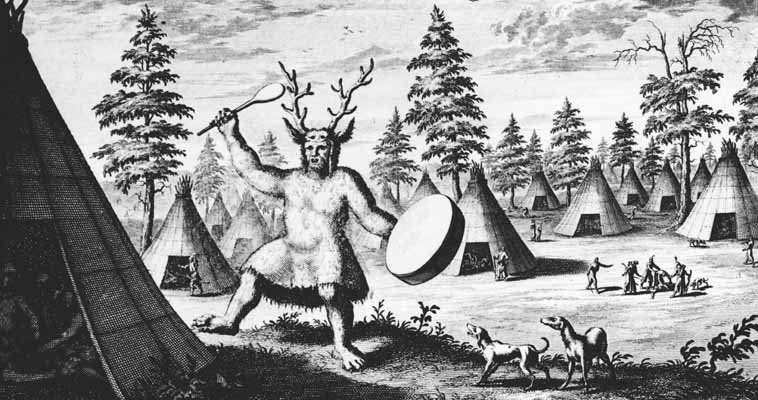
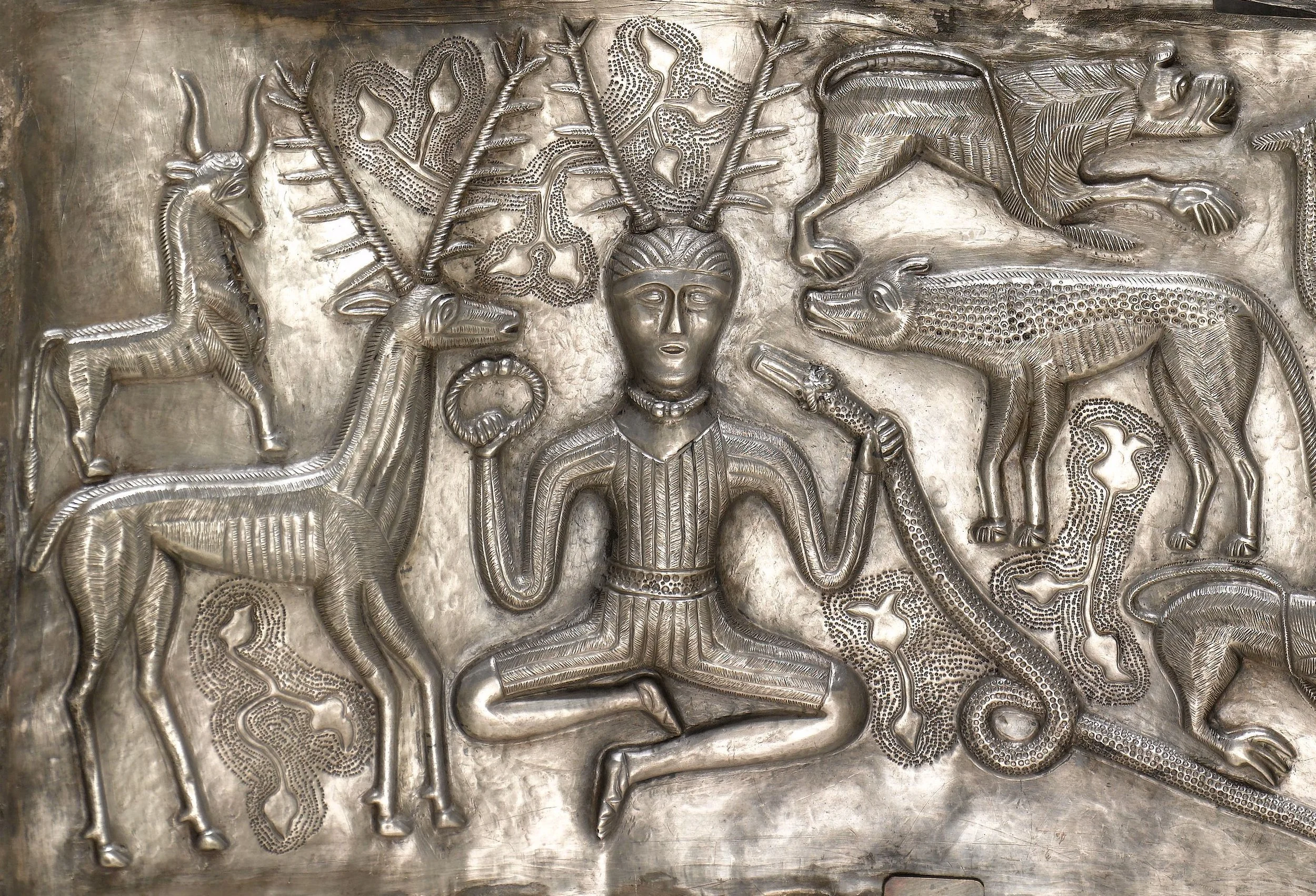
An iron age depiction of the Celtic horned god Cernunnos

‘The Nuptials of Thetis and Peleus’ - Hendrik de Clerck
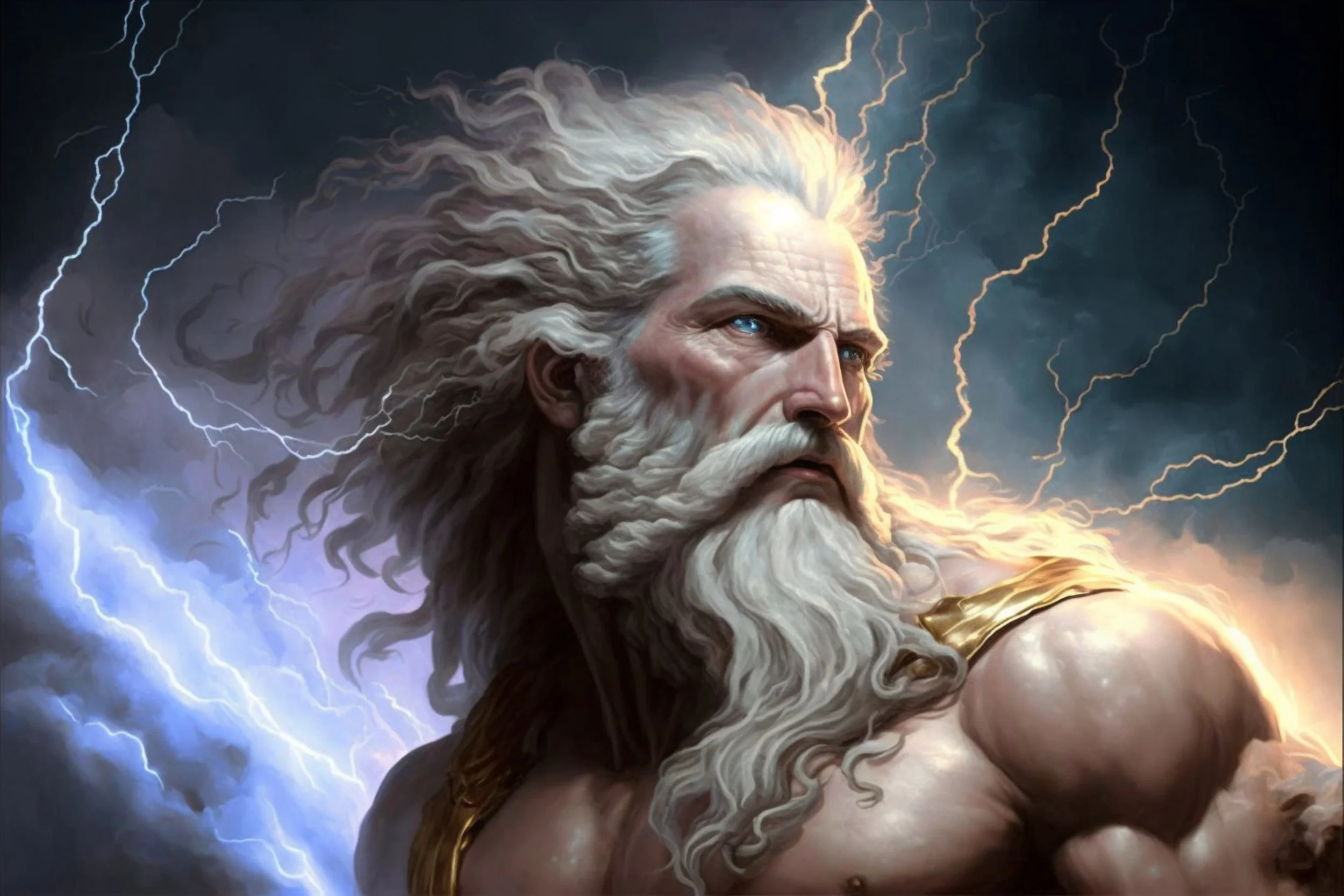
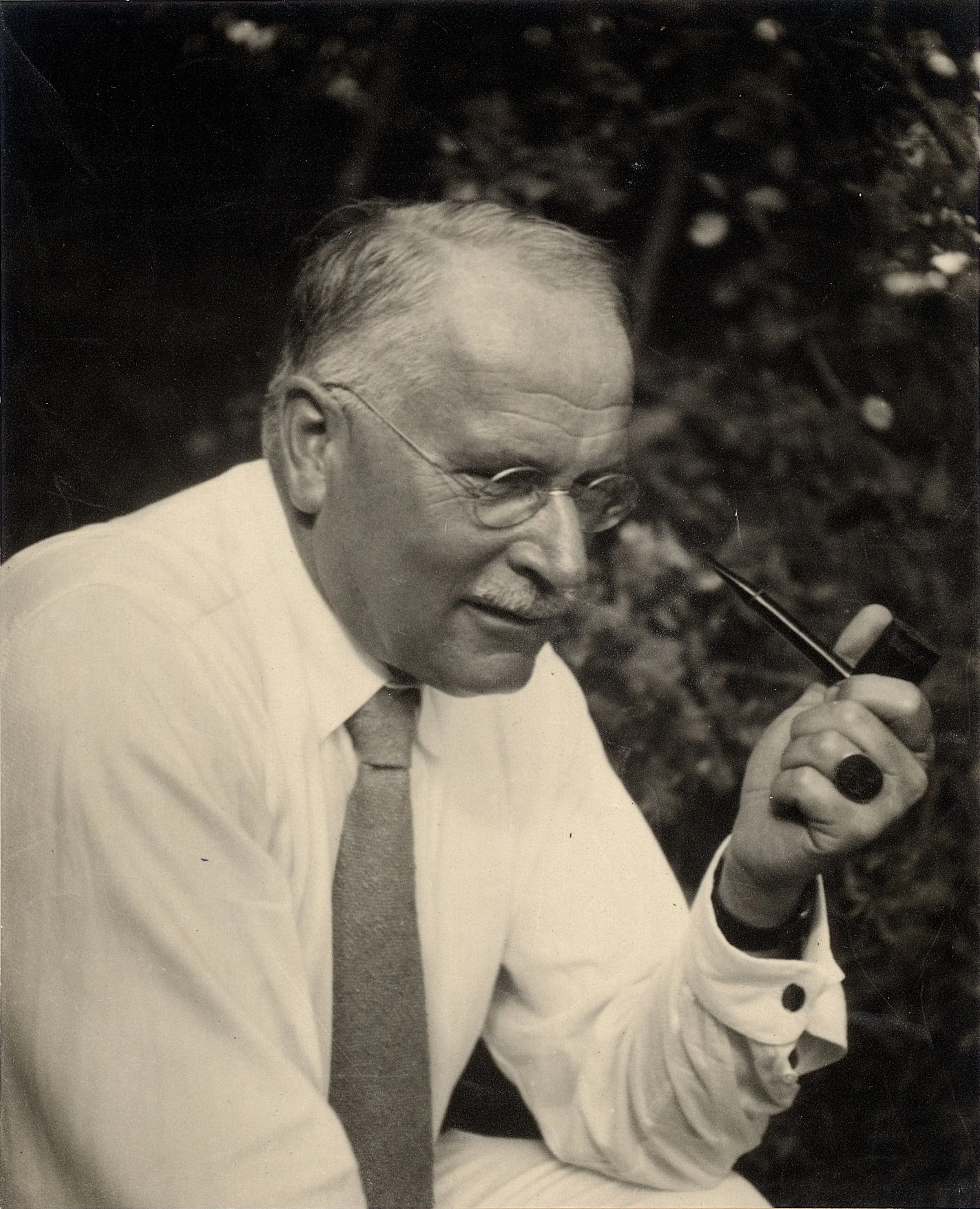
Carl Jung
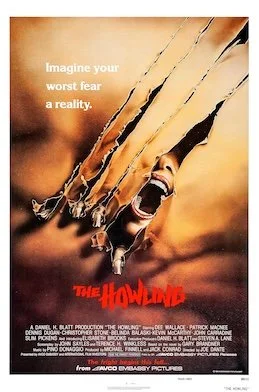
A poster for the horror film ‘The Howling’ [1981]

‘Sea and rain’ 1865 by James Mcneil Whistler
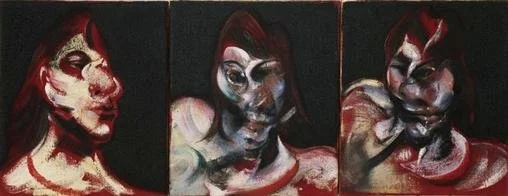
‘Three Studies for a portrait of Henrietta Moraes’- Francis Bacon, 1963
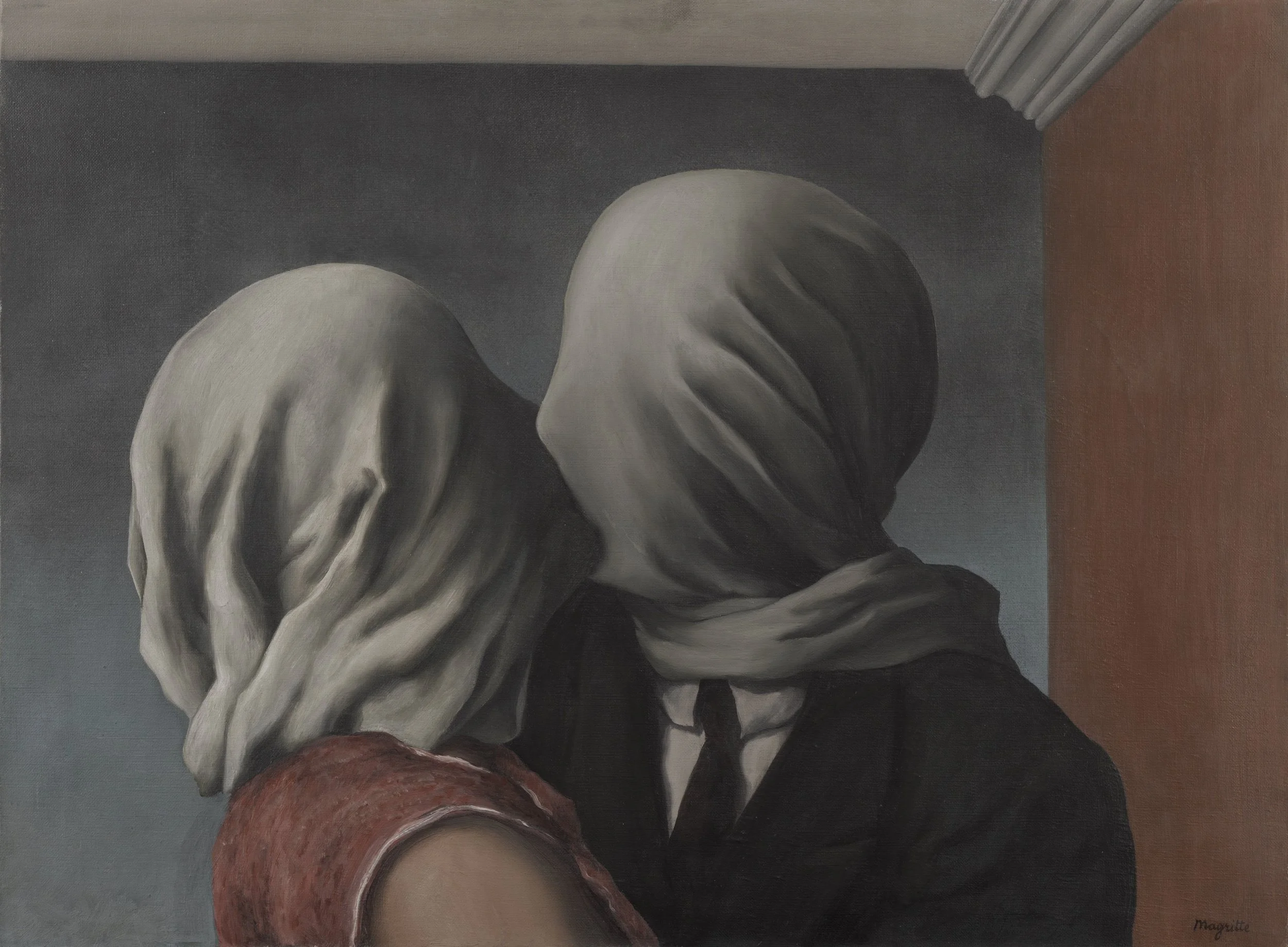
‘Les Amants’ by Rene Magritte [1928]
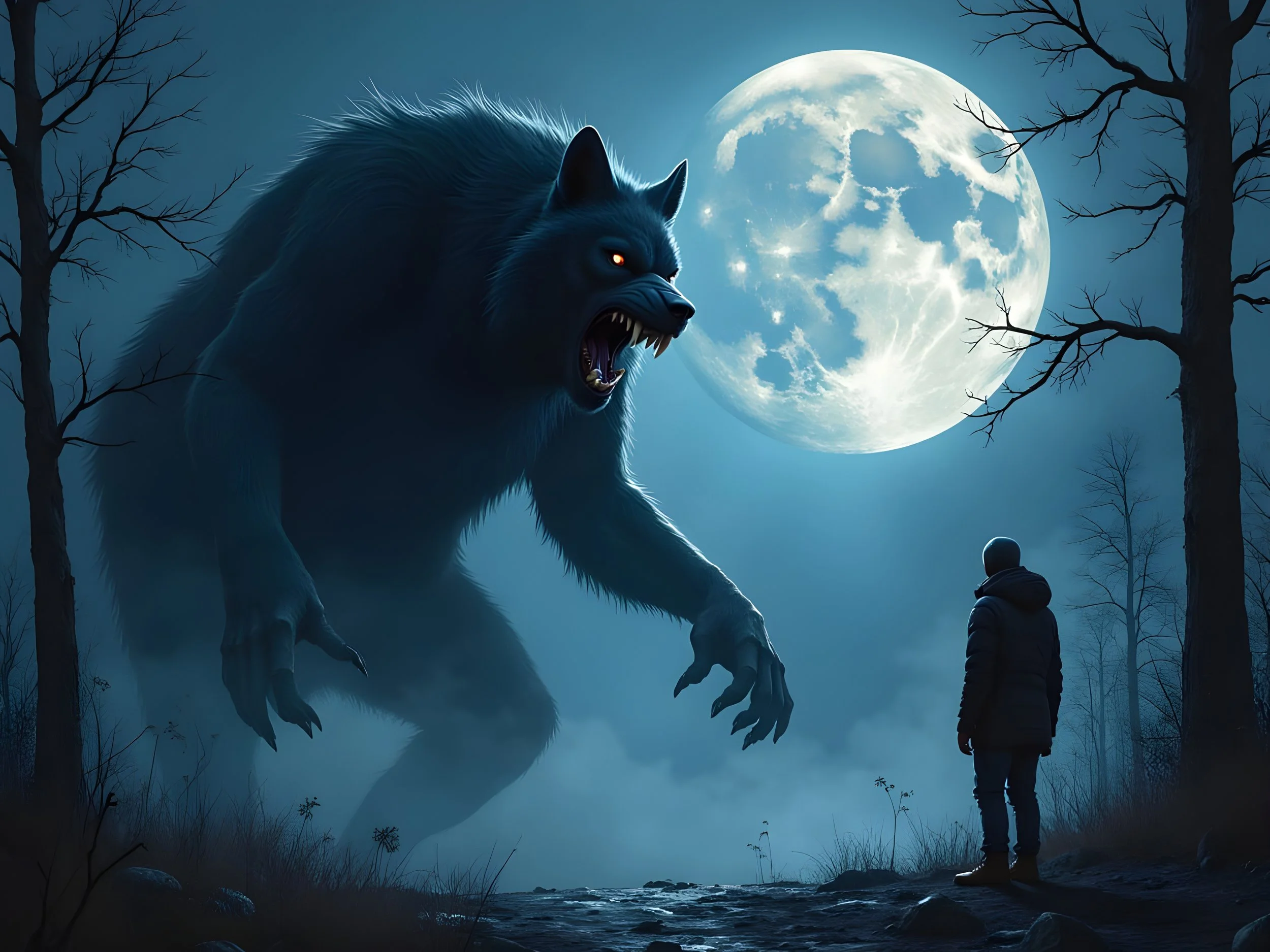
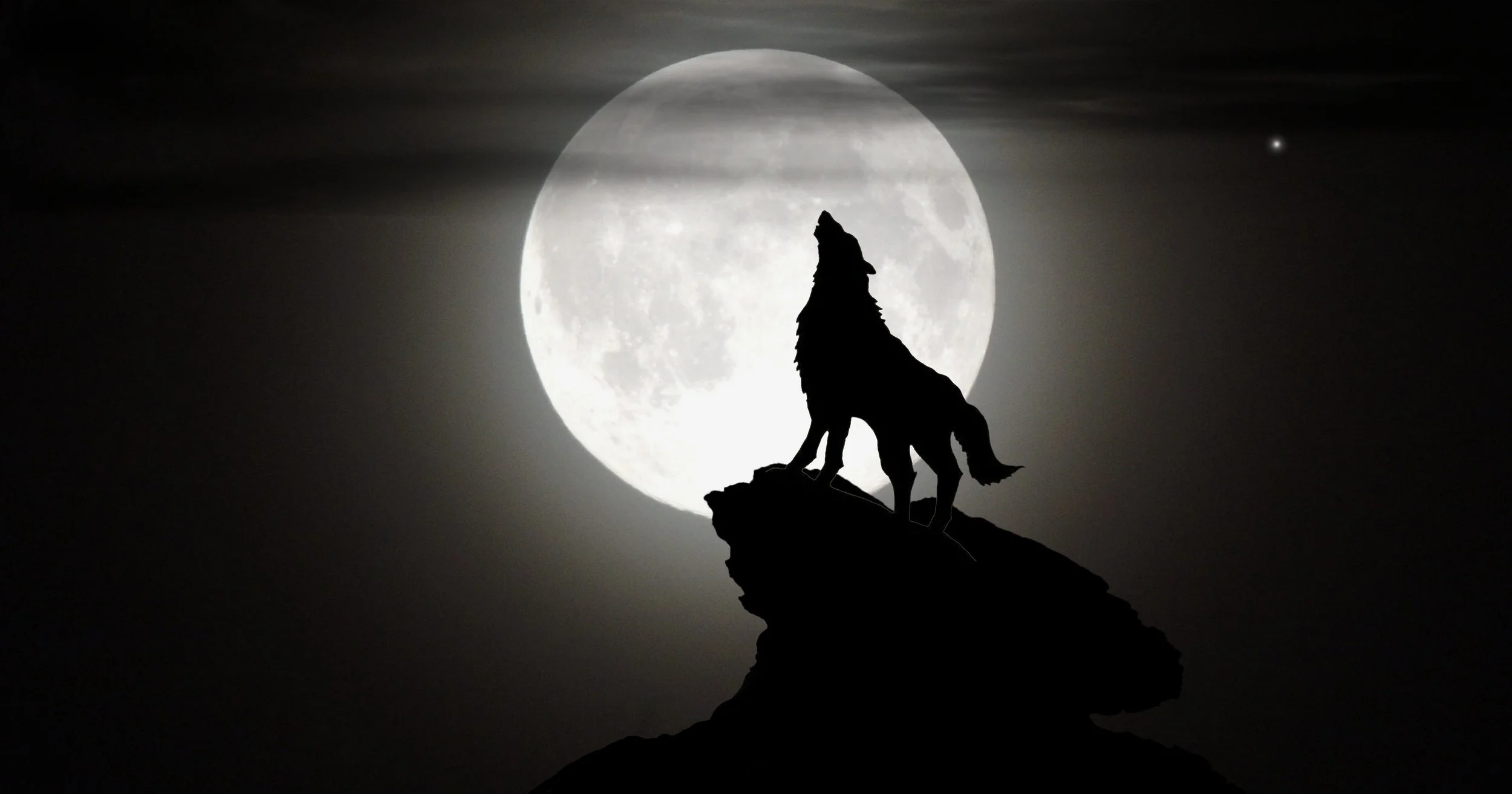
Hhhhhhhooooooowwwwwllllllllllllllllllllll !!!!!! .
Thanks for reading, good night, sleep well.