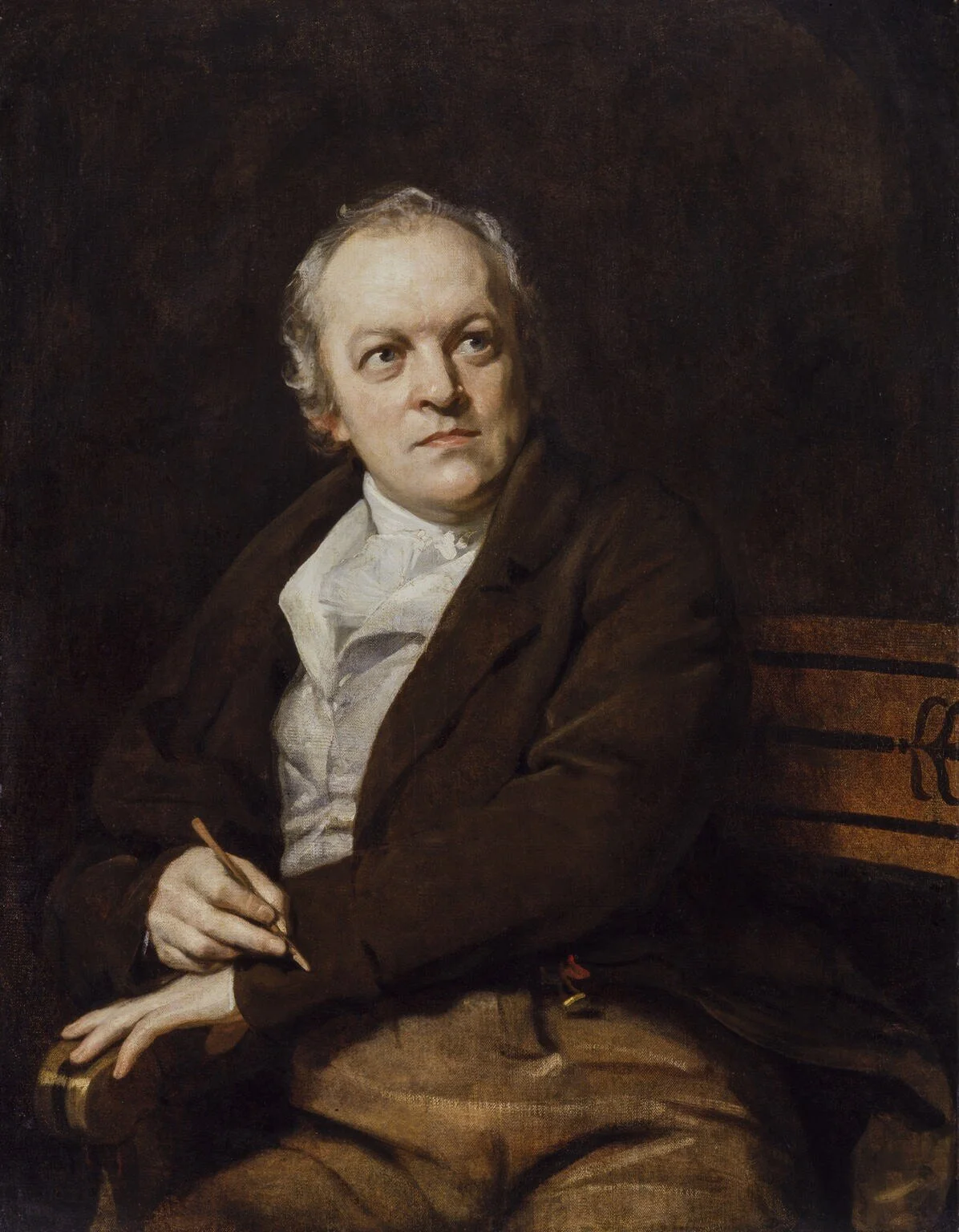
William Blake
“I rest not from my great task! To open the eternal worlds, to open the immortal eyes of Man inwards, into the worlds of thought: into eternity”
- William Blake
William Blake, poet, artist, visionary, Mystic, deranged madman, eccentric lunatic, Blake has been described as all these things. The breadth and scope of Blake’s work both as an artist, poet and visionary thinker is immense, in his own lifetime the scale of his creative output was mindblowingly vast.
However many have struggled to make sense of Blake’s complex world, a world constructed from his own unique mythology, leading some to dismiss him as a fascinating nutcase whose works can be enjoyed for their uniqueness, but whose philosophical ideas amount to the incomprehensible rantings of a deranged mind. To add to this Blakes ideas shifted and changed throughout his life, and sometimes contained contradictions, leading to further confusion.
However, after reading works by writers such as Peter Ackroyd and John Higgs, I believe it is possible to make sense of Blakes fascinating world view, which is in many ways an incredibly life affirming one, and one that can genuinely enrich our 21st century ideas about creativity, politics, and even neuroscience and the mind
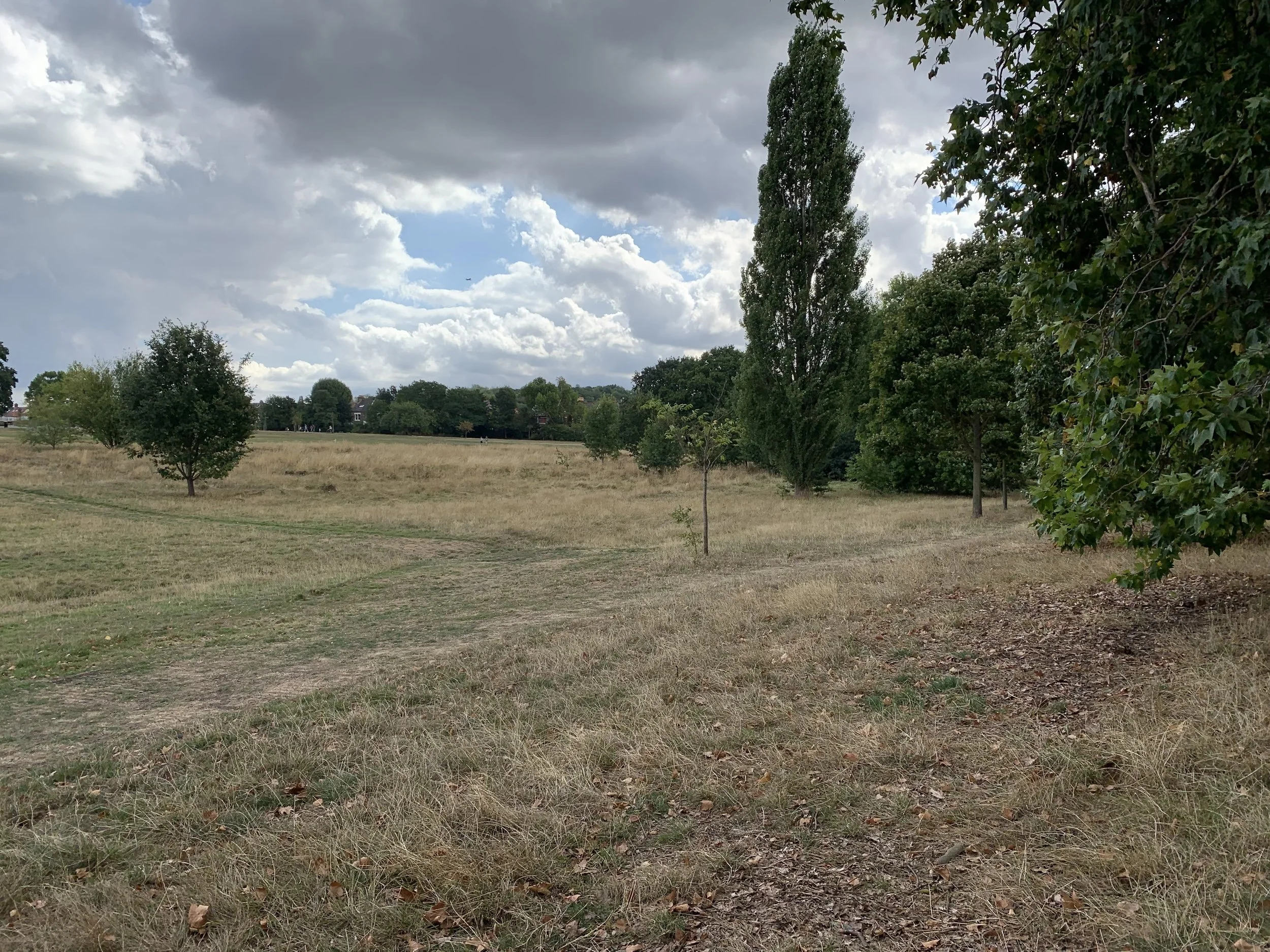
Blake was born in London in 1757. From an early age he had visions, the first was when as a child he saw God putting his face to the window, which sent the young Blake running away screaming in terror. Later on, during one of his many youthful walks out of London into what was then still the countryside, Blake famously saw angels on Peckham rye. He describes it in the following words
‘A tree filled with angels, bright angelic wings, bespangling every bough like stars’
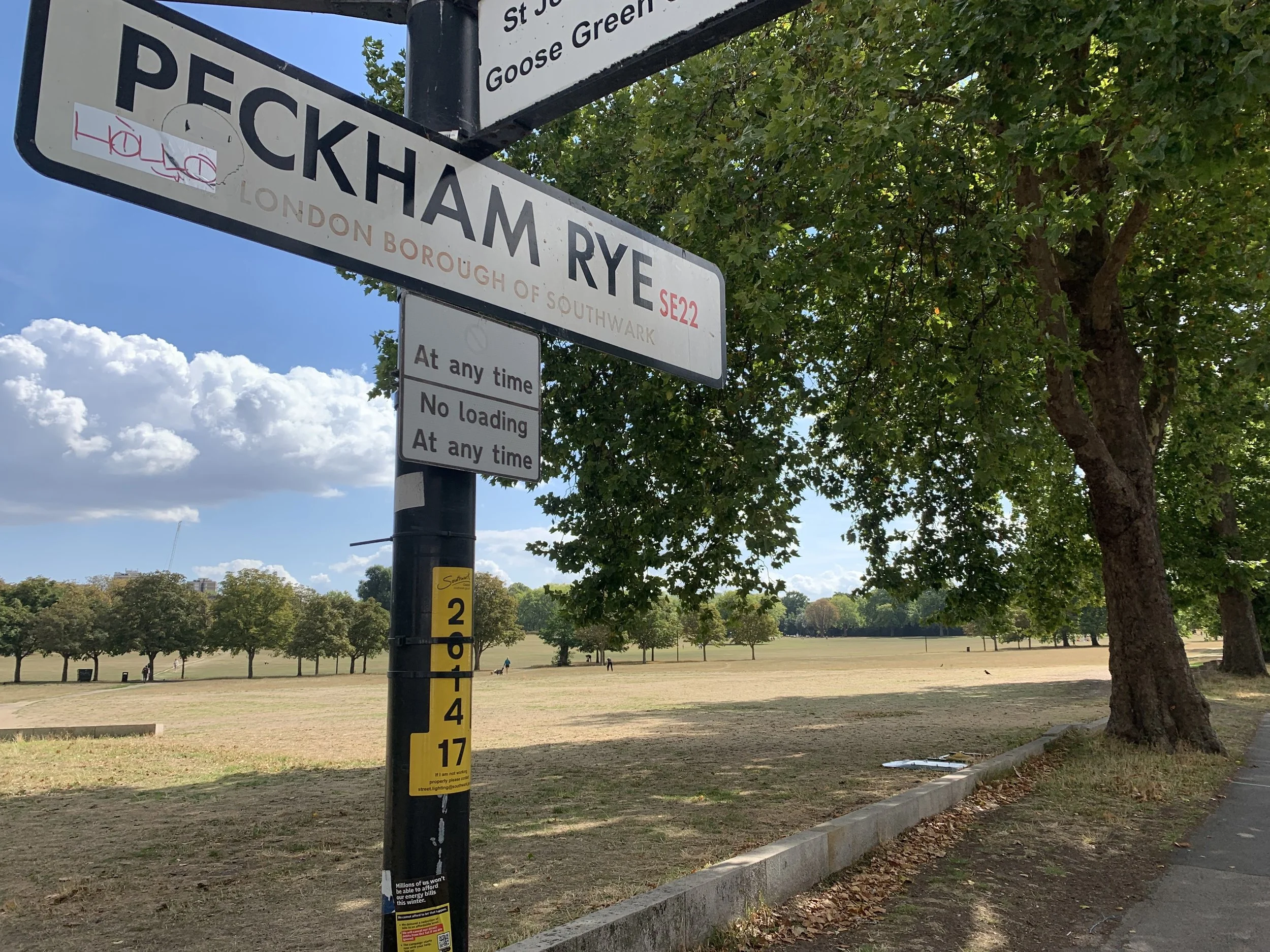
Photos by Tom Plender
Blake had persistent visions throughout his life and they often distracted him when he was in company, sometimes he was unable to work because of them, at times they drove him close to madness, but they also spurred him on to the heights of great creative achievement.
Blake was completely unrecognised during his own lifetime and often ridiculed, he laboured in obscurity and only had one solo exhibition, which was a disaster. However despite the lack of recognition Blake was not an entirely unhappy or tragic figure. He certainly had his ups and downs in a life often filled with profound frustrations, but his existence was enriched by a deep sense of creative purpose, and in later life he seemed content and reconciled to the view that his work would eventually be recognised by later generations for its true greatness, even if he would not live to see it.
‘Improvement makes strait roads, but the crooked roads without Improvement, are roads of Genius’.
Blake was a natural outsider, an anti-authoritarian and anti establishment figure. Blake’s father, noticing these characteristics in his son, decided it would not be wise to send him to school, for fear that he would end up being constantly punished. For this reason he was mainly taught at home by his mother, he also educated himself, having a strong autodidactic streak and read very widely. Blakes unusual education no doubt contributed to his unique world view, as he relates in one of his poems-
‘Thank god I was never sent to school, to be floggd into following the style of a fool’
Although he considered himself a Christian, Blake was at odds with conventional Christianity, and did not support the established church, which he viewed as his enemy. He was also very much at odds with his own time, this was the era of Isaac Newton, the scientific revolution known as ‘The Enlightenment’ and the dominant rationalist worldview. Blake loathed the Newtonian mechanistic/materialistic worldview, and like many associated with the Romantic movement, he thought that it deprived life of the sublime and spiritual, by reducing the world to mere matter and mechanical processes. He was also an antimonarchist, believing all humans despite race, colour or creed, are equal. At one point Blake was even tried, but later acquitted for antimonarchist sentiments.
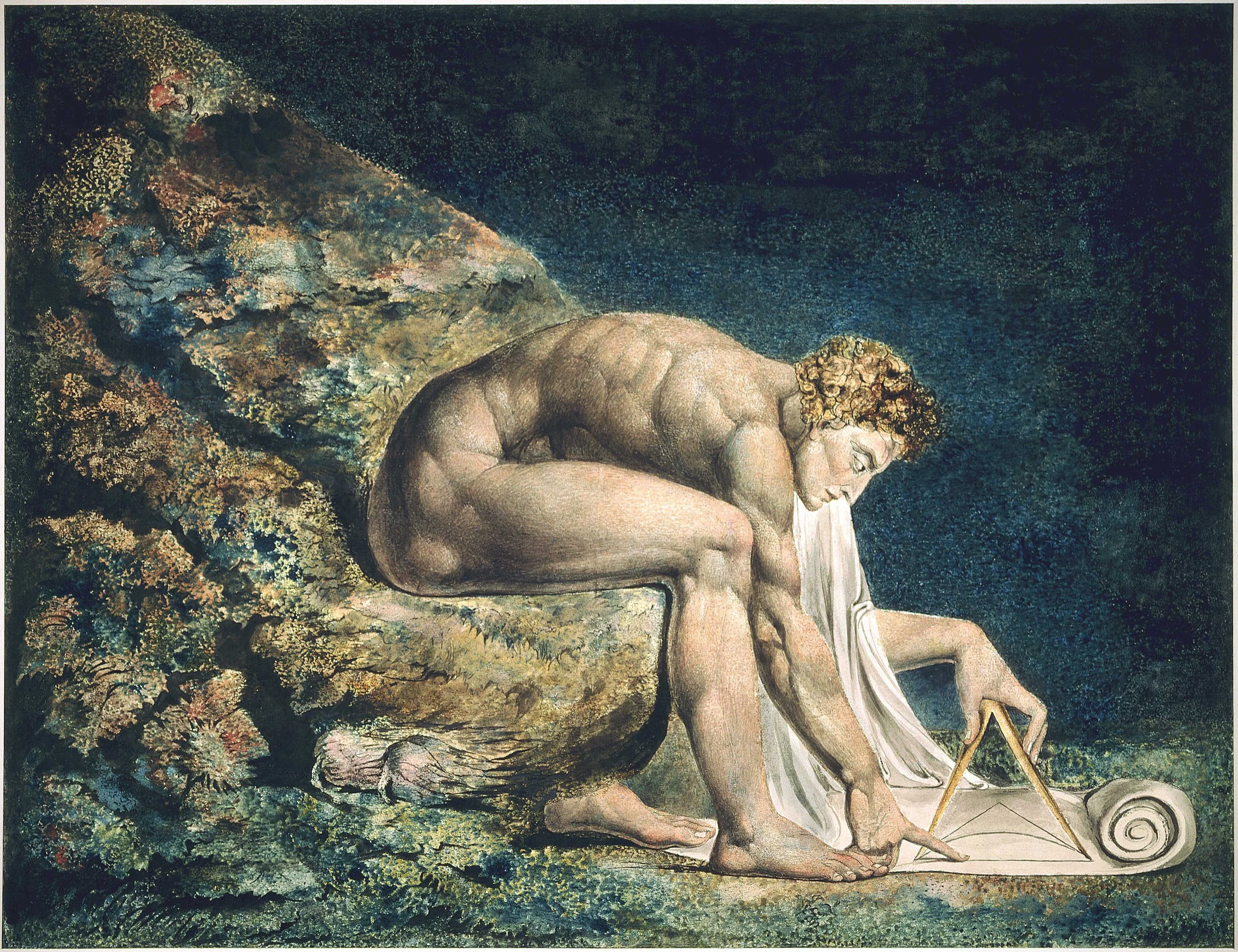
Blake was also a modern thinker, in celebrating sex and sexual energy. In his view sex was sacred and was one of the vital forces of life, the suppression of which potentially contributed to aggression and warfare. He also believed in polygamy, though there is no evidence he ever actually practised it, being happily married for most his adult life.
Blake lived through fascinating and unstable times, throughout his lifetime England was almost continually at war and this resulted in frequent famine, disruption and strikes. Blakes London was a violent place of unrest, where mobs often gathered, and as a result the authorities frequently resorted to repressive measures. In addition to this, just over the channel the French Revolution was underway. Blake also lived through the time of the American Revolution, and this climate of change and unrest would most certainly have contributed to his personal philosophy. Blake had a strong moral perspective, and was appalled by the injustice and the cruelty imposed on many by the terrible working conditions that resulted from the industrial revolution.
He was also at odds with the artistic traditions of his era, as epitomised by the Royal Academy and artists such as Joshua Reynolds and Gainsborough, whom he loathed.
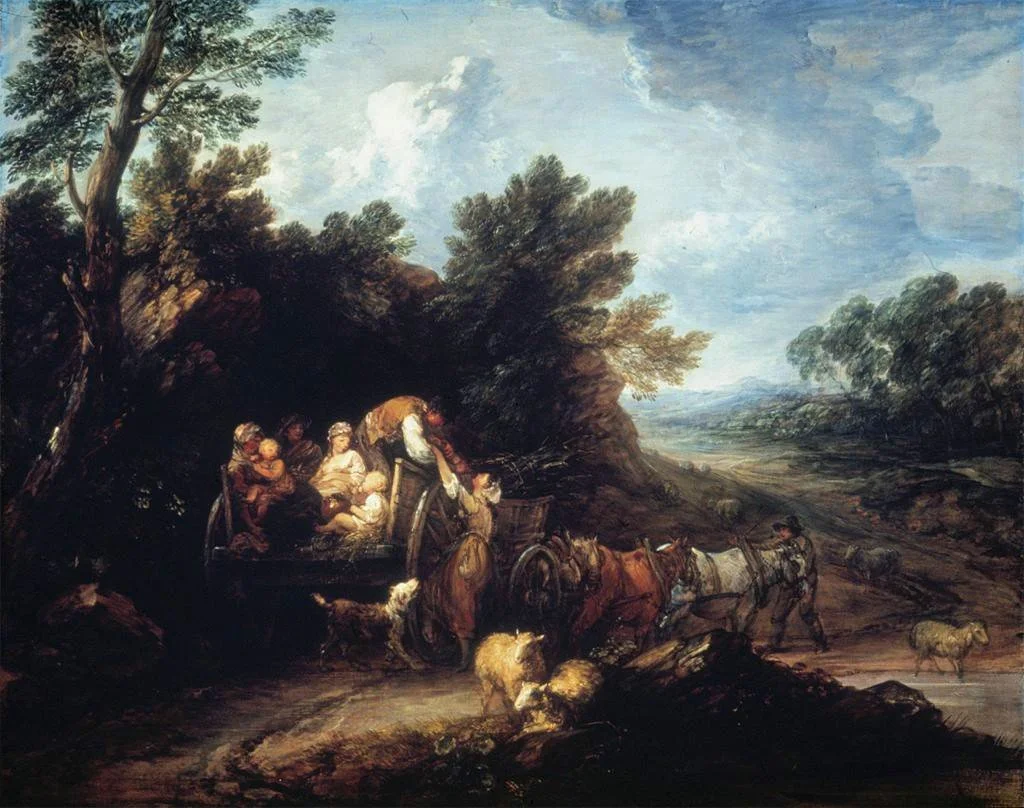
‘The Harvest Wagon’ by Thomas Gainsborough
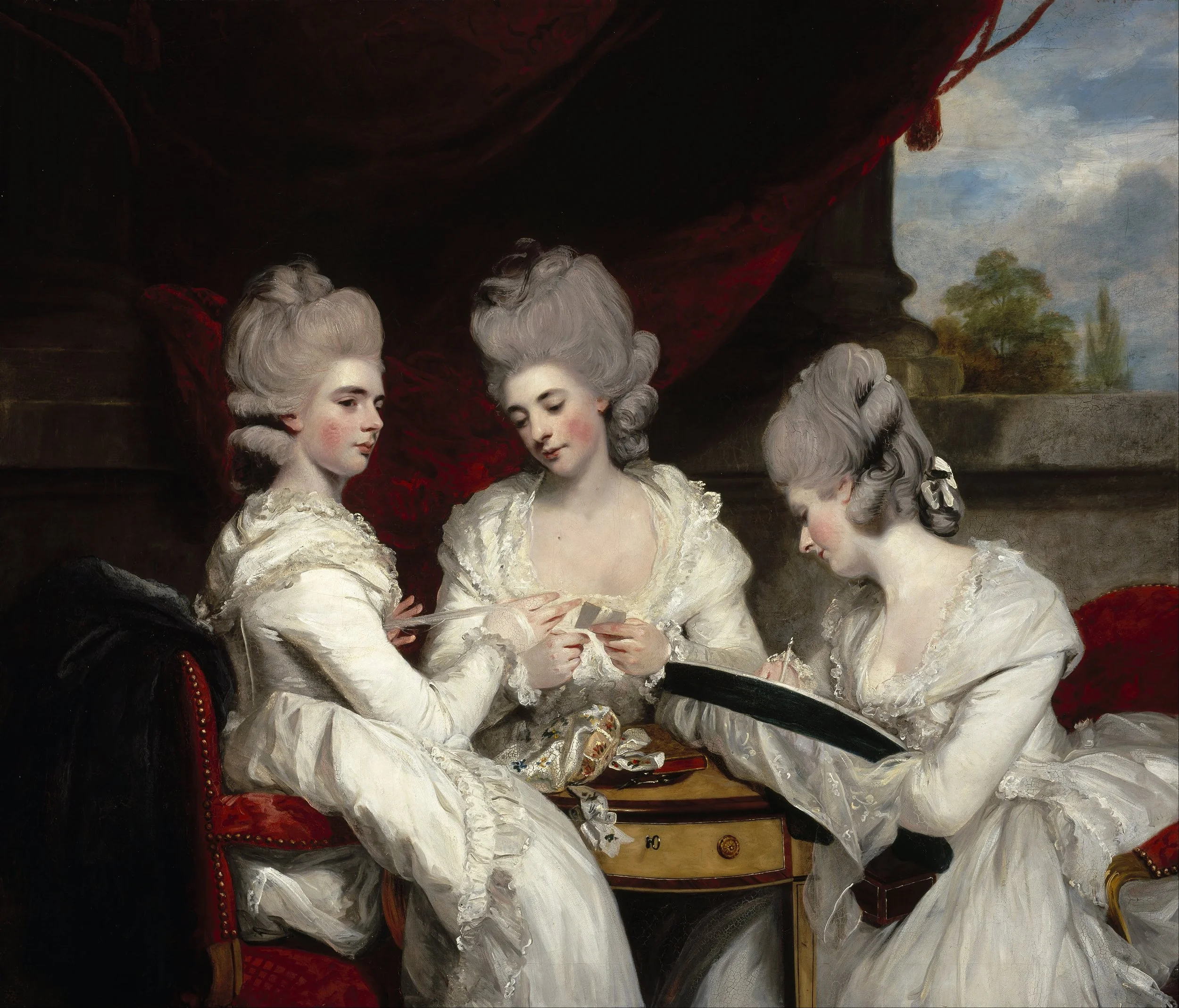
‘The Ladies Waldergrave’ by Joshua Reynolds
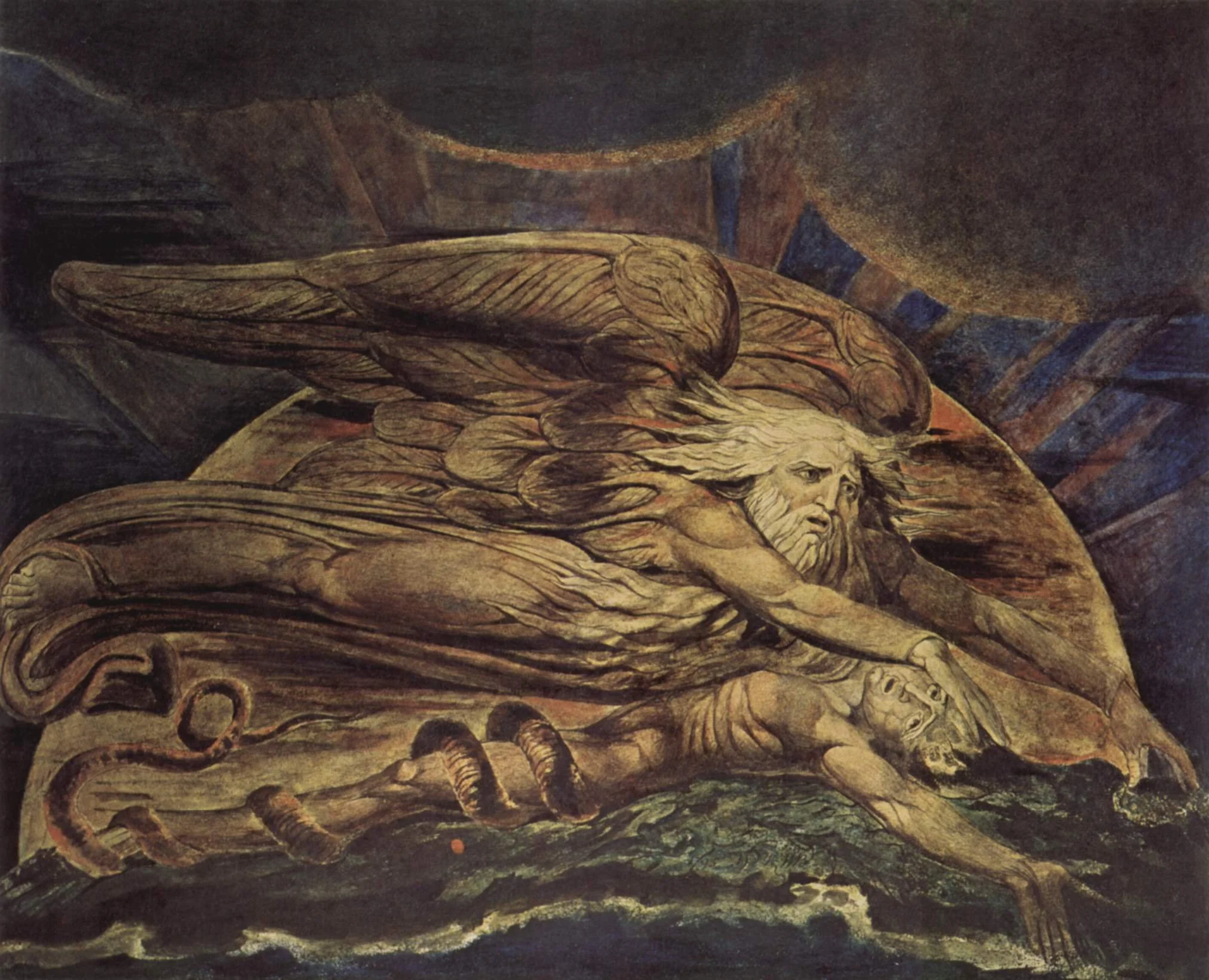
To view the works of Reynolds and Gainsborough, with their portraits of the aristocracy, and depictions of pastoral scenes, is to see just how revolutionary an artist Blake was. In exploring his inner realms and creating works of explosive and often terrifying visionary realities, Blake was making work like no one else of the time. In many ways he had more in common with figures like Durer and other visionary mediaeval artists who worked from the imagination, and Blake saw himself as reconnecting with this older tradition.
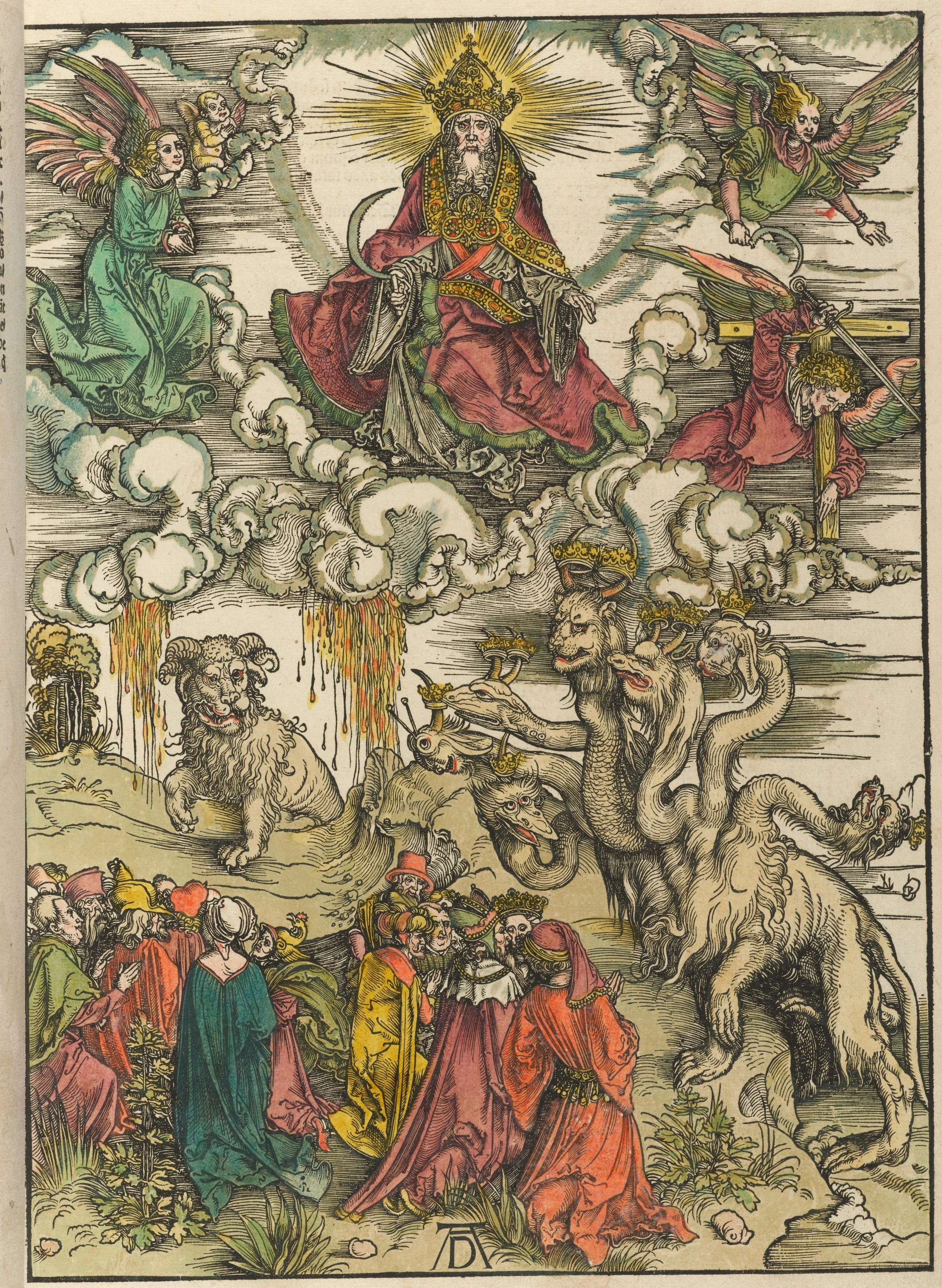
Albrecht Durer - Apocalypse Series
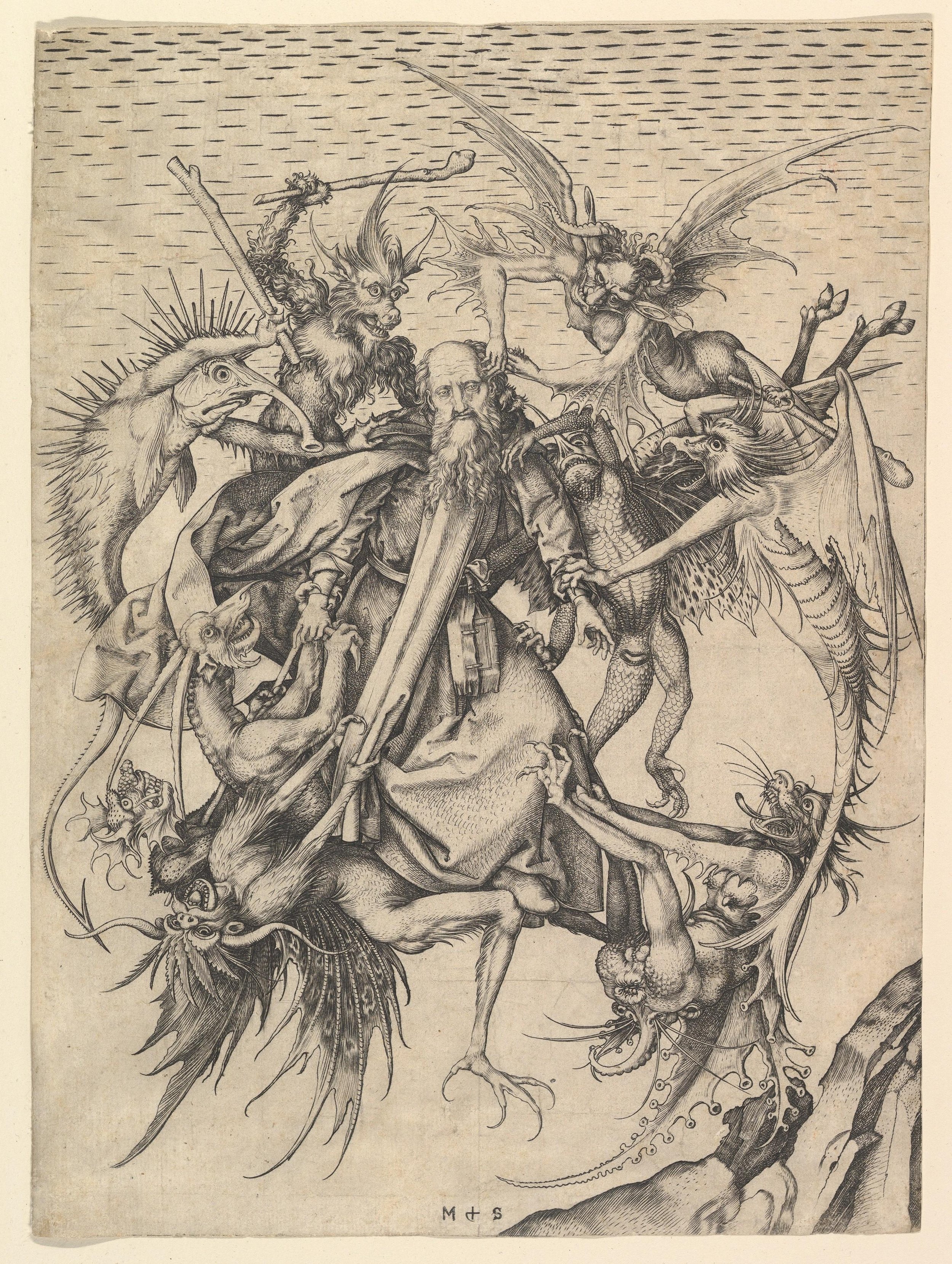
Martin Shongauer - Saint Anthony Tormented by Demons
Blake was essentially a prophet of the imagination, to him imagination was everything, not just a state, but the essence of human existence, and he was certainly not interested in painting pastoral scenes,
‘Drawing from life is more like drawing from death, nature weakens destroys and deadens imagination in me’
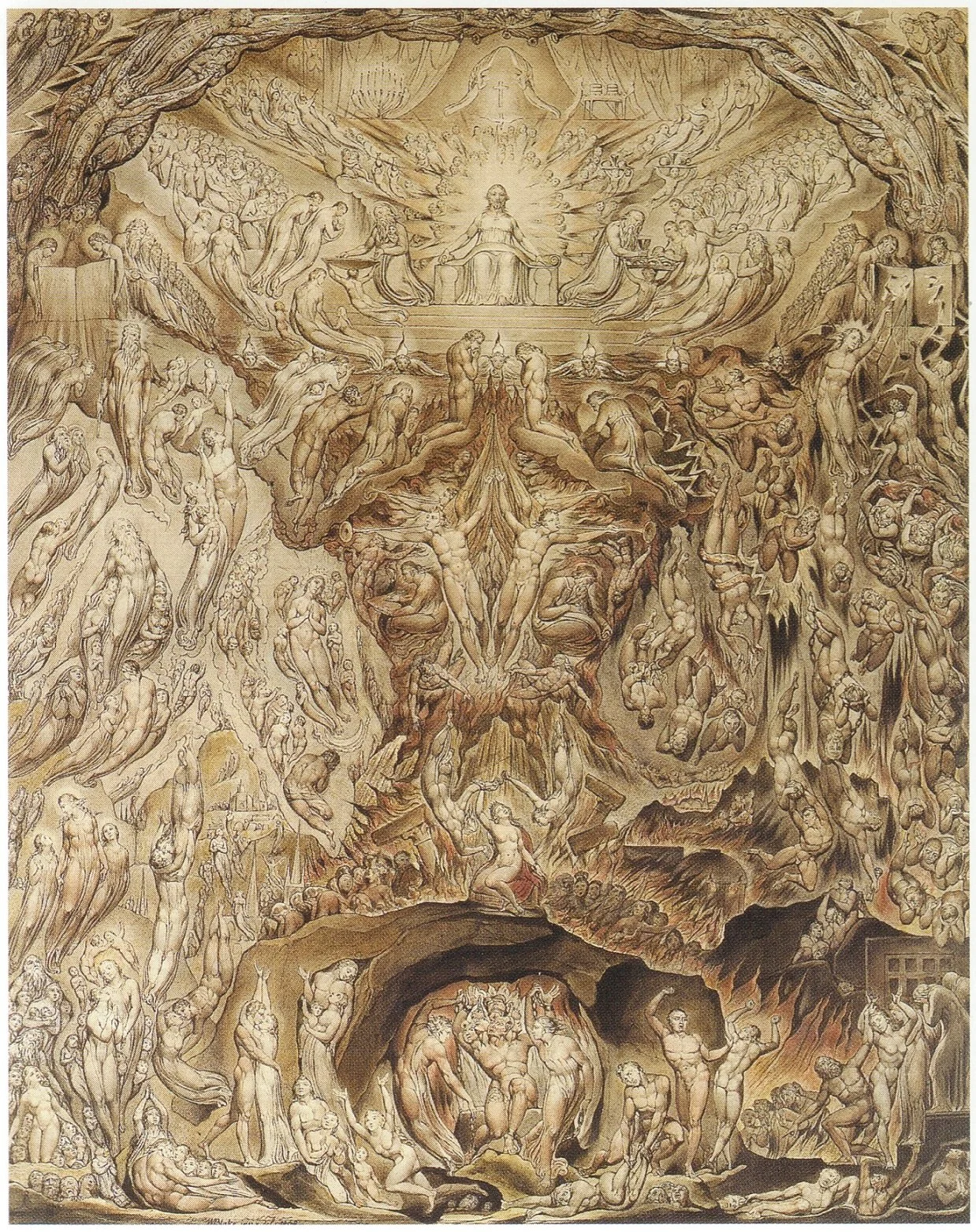
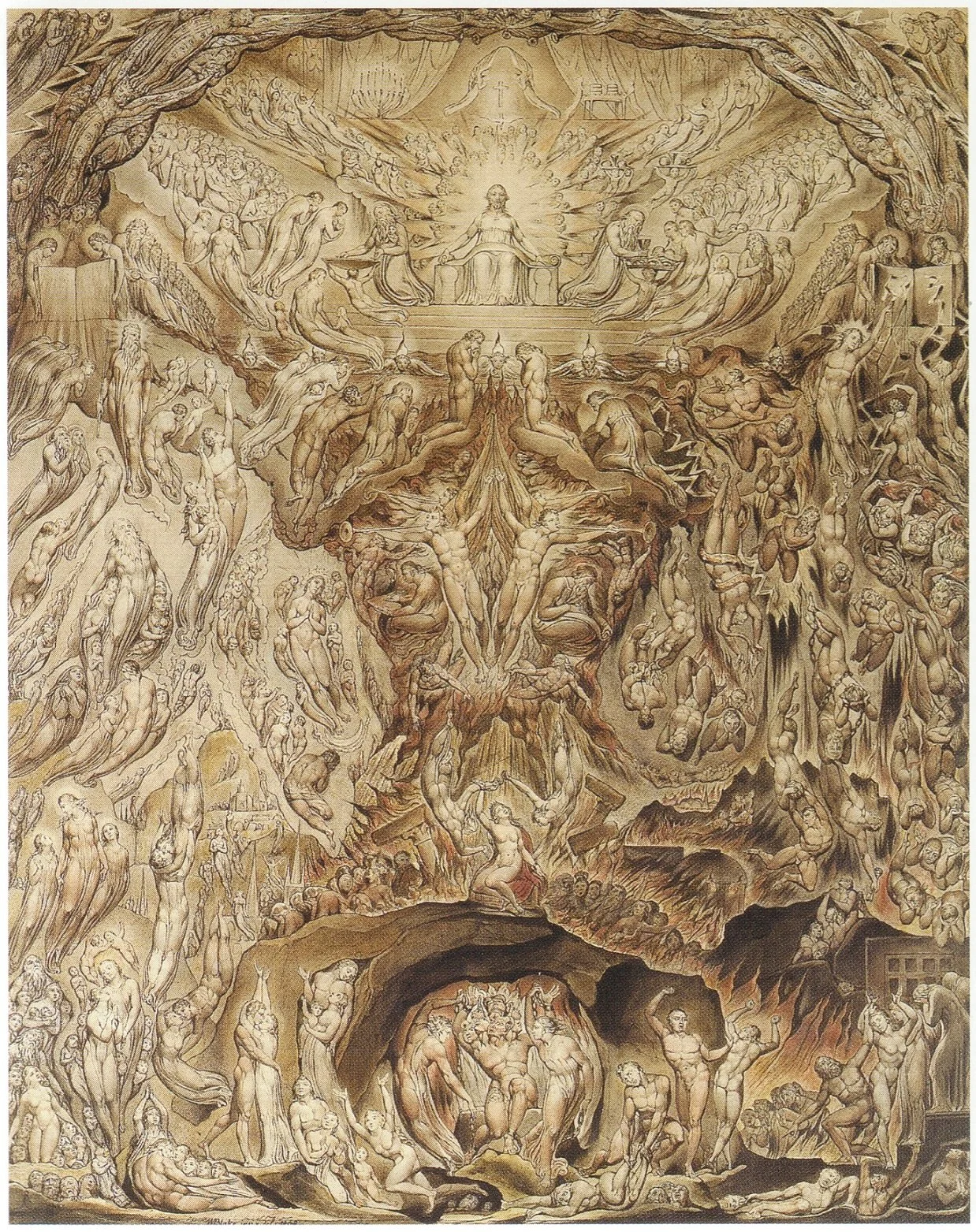
The Last Judgement - William Blake