FAUST
PART ONE
‘If the devil does not exist, and man has therefore created him, he has created him in his own image and likeness’
- Fyodor Dostoevsky
In western culture there are certain ‘master narratives’, stories that are retold again and again in different forms. The hero’s quest is the classic example, a common tale in which the hero must embark on a journey, discover his unique abilities, defeat an evil being, and then marry a princess. Beowulf, The Odyssey, King Arthur, Star Wars, Lord of the Rings and a great many other tales conform more or less to this narrative.
The Faust legend is another ‘master narrative’ that once again has ended up being retold multiple times, over several centuries, in different forms. The idea of a ‘faustian bargain’ - making a pact, or selling your soul, in order to avoid worldly suffering and attain unlimited pleasure and knowledge, is a concept that continues to haunt the western psyche.
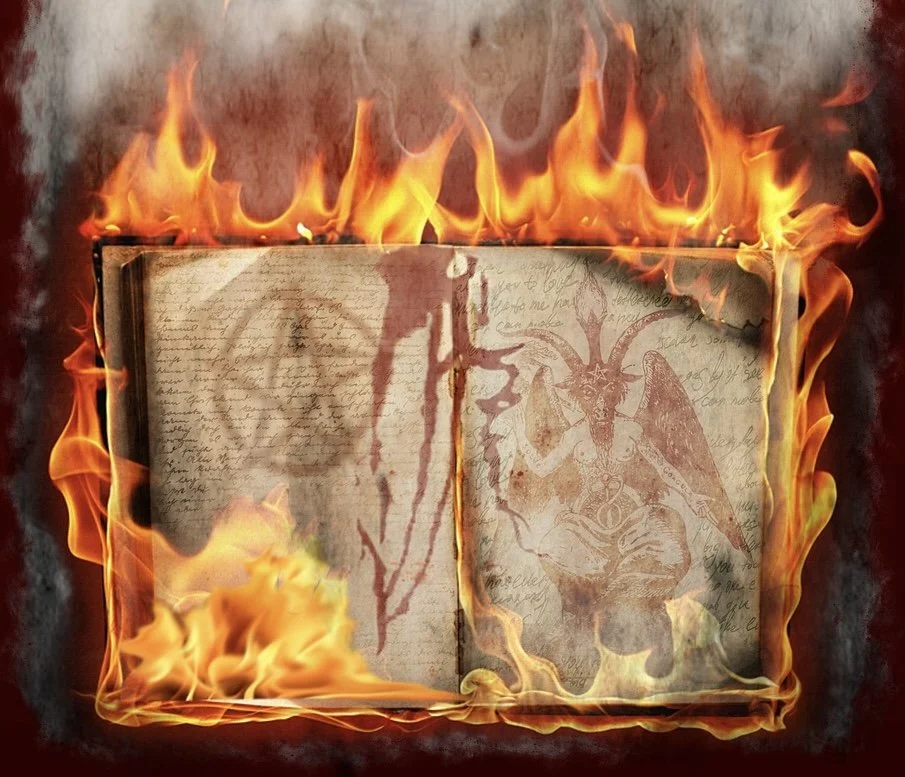
The basic plot of the Faust story is usually as follows. Faust, a German scholar, having spent a lifetime of study in science, medicine , philosophy, and all forms of learning, is disillusioned and in despair with life. Frustrated with the limits of human understanding he craves more, and begins to turn to the dark arts of magic and necromancy for answers. Mephistopheles, the devils servant, appears before him and offers Faust unlimited knowledge, power and earthly pleasure, but only, in exchange for his soul!
A contract is duly signed in blood, and Faust and Mephistopheles set out on a strange journey across the known world and beyond.
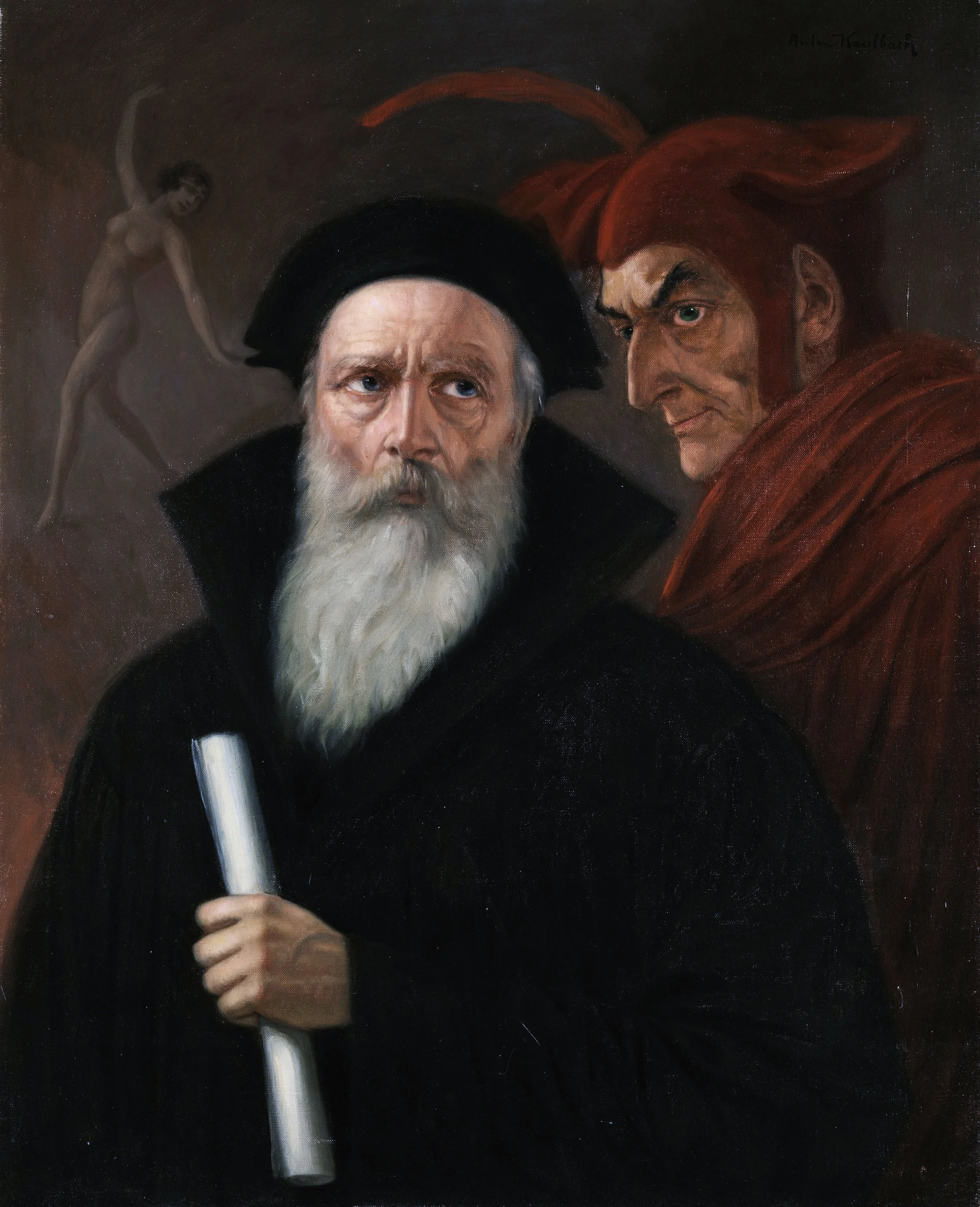
The origins of the Faust myth seem to have sprung from various different sources, however there was an actual historical figure the legend is loosely based on - a 15th century alchemist, astrologer and magician named Johan Georg Faust. Not a great deal is known about him, but apparently he studied at the University of Heidelburg and was something of a rogue and a charlatan, who used his knowledge for deception, wandering from city to city selling various dubious magical services.
The rumours were that he wanted to be the most intelligent man in the world and also indulge in as many worldly pleasures as possible, so he sold his soul to the devil to achieve this. It was also rumoured that he enjoyed sodomy, being cruel to his students, and that his pet dog was actually a demon, who could transform itself into his man servant. He allegedly died when he blew himself up during an alchemical experiment in his laboratory, and from this point on his tale entered into myth and folklore.
The Faust story seemed to resonate with the times as it coincided with the era of Martin Luther and the reformation. As a result it became a kind of cautionary tale, emphasising the dangers of dabbling in black magic and the importance of personal morality. This was also the era in which the astrologer Copernicus had discovered that the Earth was not in fact at the centre of the universe, creating for some, a sense that God may have set limits on man, and that to try and go beyond such human limits, as Faust attempts to do, could be extremely dangerous.
The 16th century chapbook ‘The Historia of Dr Johan Faust’ published by Johan Spies was the first source to lay down the basic plot of the Faust tale. The book eventually reached England and became a source of inspiration for Christopher Marlowe’s classic play - ‘The tragical history of the life and death of Dr Faustus’ which was probably the first serious theatrical rendering of the story.
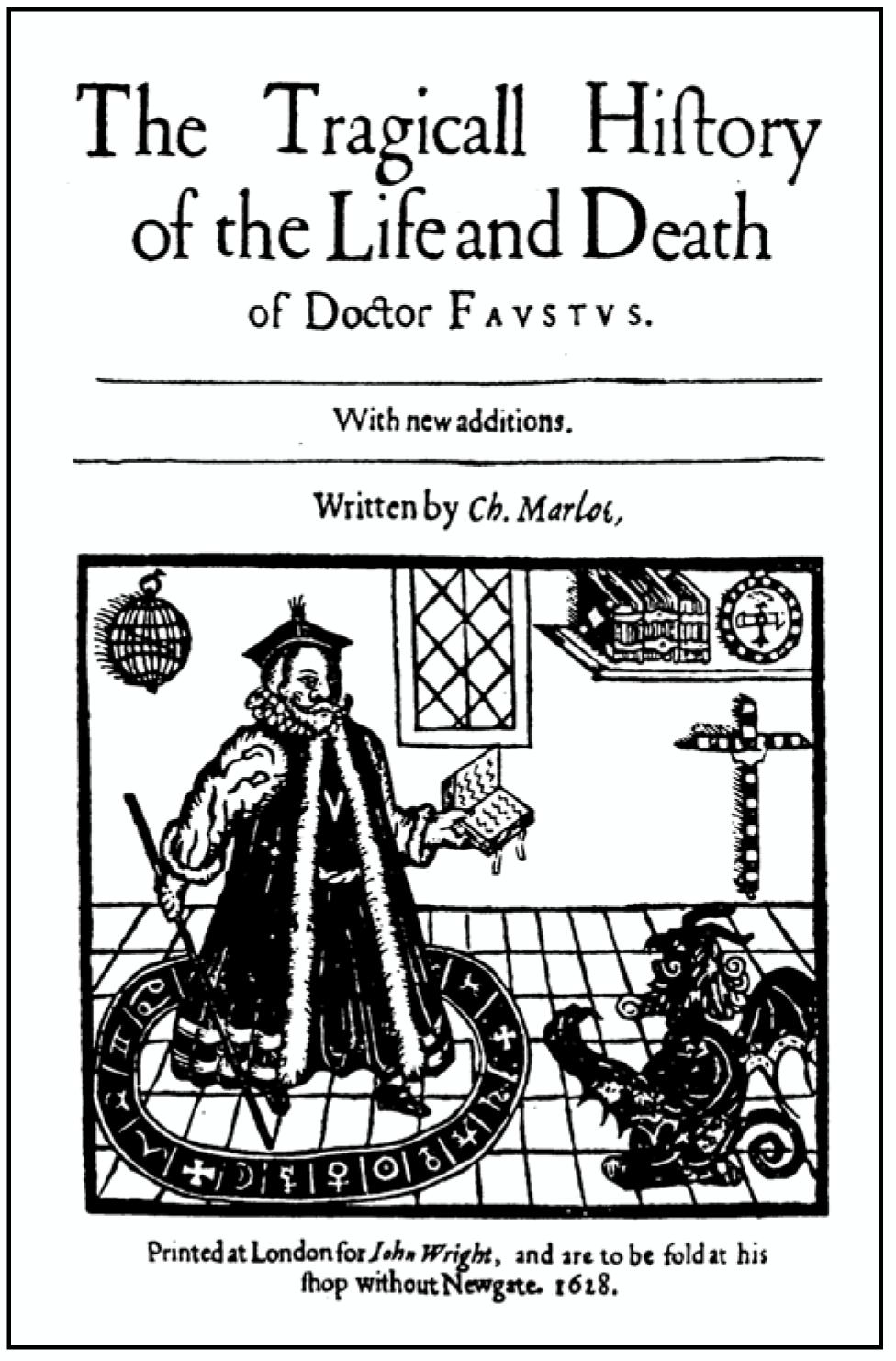
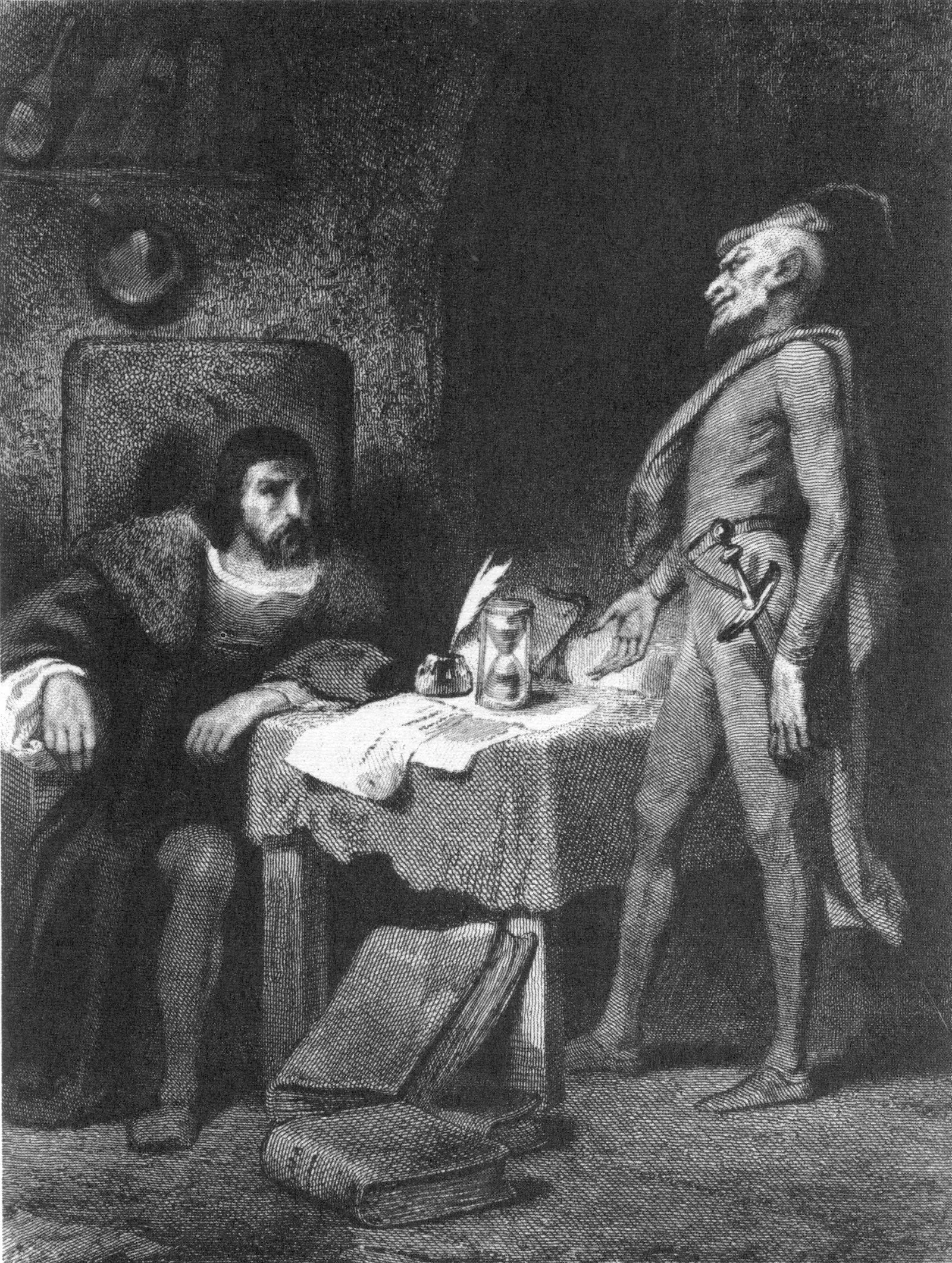
It has been speculated that the 1587 chapbook was not the only inspiration for the play, Marlowe may have also had the Elizabethan magician and alchemist John Dee in mind when he depicted the character of Faust. John Dee’s own life certainly resonates strongly with the Faust tale. Dee was the court advisor and astrologer to Queen Elizabeth, and in his quest for forbidden knowledge and the dark arts, began to work with the psychic Edward Kelly, who claimed to be able to channel angels and communicate with other worlds. These channelling sessions led to the creation of the Enochian language and an entire complex magical system.
Dee and Kelly travelled across Europe doing the angels bidding in return for the eventual promise of ultimate knowledge. But in the end, the angels Kelly claimed to be channeling, made a series of blasphemous demands, before eventually going silent and never delivering on the ultimate revelations they had promised. After this Dee’s life descended into tragedy, and he eventually died in poverty and obscurity.

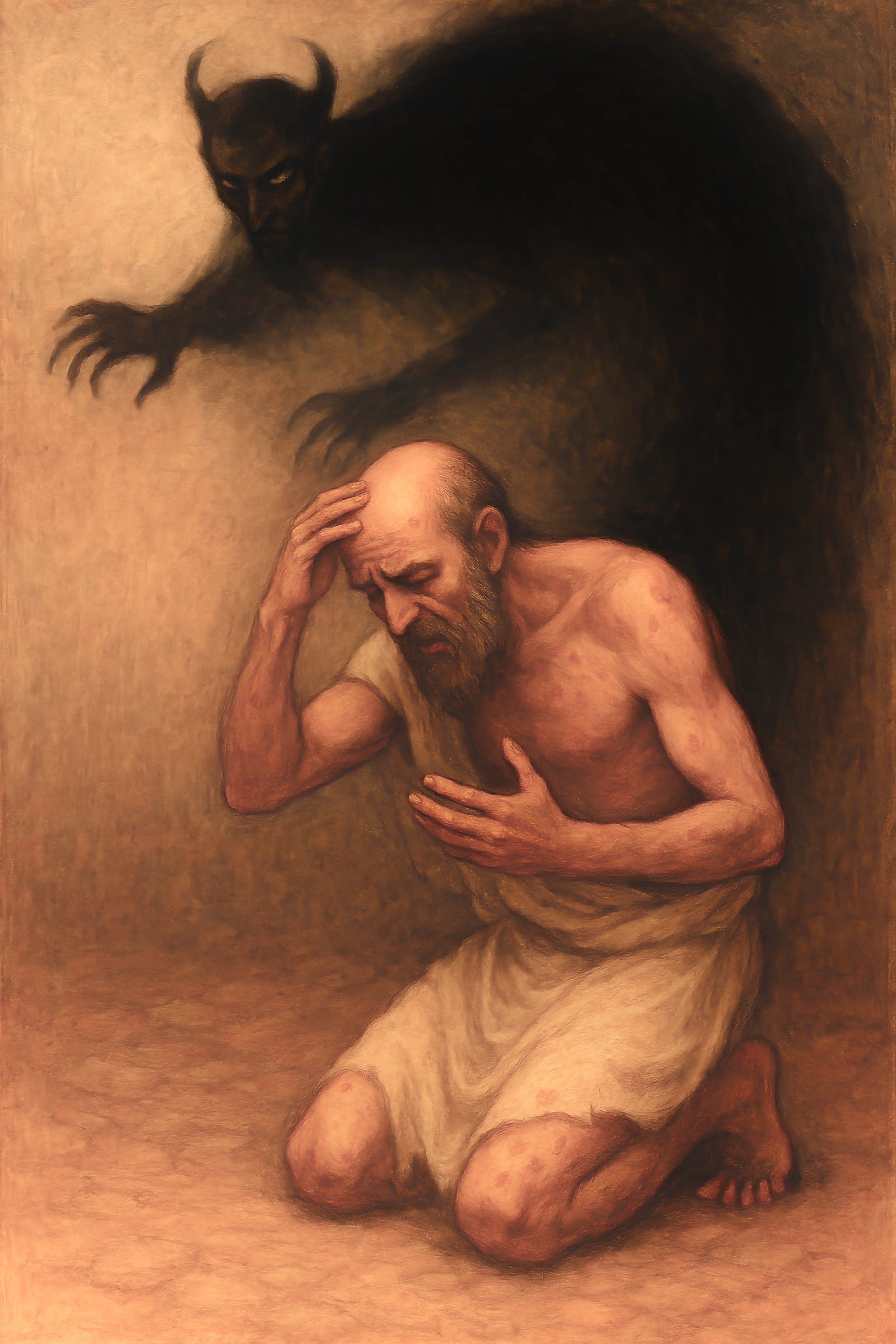
Christopher Marlowe’s play, in it’s retelling of the Faust story, is important because it elevates what was a basic cautionary morality tale, to the level of high tragic art. As a result it transcends the simple moral message of earlier versions. Marlowe introduces the idea of Faust as a learned and respected scholar. He creates a Faust who is not just a simple villain or anti hero as in previous versions, but instead turns him into a much more sympathetic and complex character. This further heightens the sense of tragedy when he is dragged off to hell by demons at the end of the play.
Marlowe's Faust, and much later Goethe’s version, both captured the mood of several centuries of great change in Europe, when the closed and rigid boundaries of the mediaeval world were gradually being broken down. The mediaeval system of Feudalism was defined by three social classes or ‘The Three Estates’ - The Clergy, The Nobility, and The Commoners, with those who worked the land and artisans representing about 90- 98% of the population. However these rigid feudal structures began to erode and were destabilised when a new and increasingly powerful bourgeois merchant class began to emerge. The late middle ages from the 12th - 15th century layed the foundations for the transition to the modern era, driven by major events such as the rise of cities, the invention of the printing press in 1450, and the discovery of the Americas in 1492.
In fact Karl Marx, the great critic of modern capitalism, took the view that the beginning of capitalism stemmed from the influx of gold from ‘The New World’ of the Americas.
The period from 14th century onwards, known as the Renaissance, was a time of ambition, exploration and a new intellectual freedom, sparked by the rediscovery of the philosophical, artistic and literary achievements of ancient Rome and Greece, that had largely been lost to Europe for centuries, but were preserved by the Islamic world. In many ways the renaissance was the beginning of the age of the individual, however with it’s emphasis on humanism - a philosophy emphasising human potential and individualism, was in direct tension with the old and rigid Medieval Christian theology that demanded humility. In his play Marlowe is simultaneously celebrating the ambitious energy of the Renaissance, but at the same time pointing out its potential dangers.
Faust embodies the Renaissance passion for unlimited knowledge and wealth, and the ambition to extend beyond the limits of man set by previous eras, he announces his desire to acquire fame and wealth by curing the incurable -
“Be a physician Faustus, heap up gold, and be eternalised for some wondrous cure”
But he then abandons this idea, arguing if he cannot make men live forever or raise the dead, he is still a mortal, not a god, so what’s the point. Instead he chooses the quick and seductive path of black magic, which ultimately leads to his damnation.
Later on in an echo of the greed and ruthless exploitation that would drive European exploration of ‘the new world’ he states-
“I'll have them fly to India for gold
Ransack the ocean for Orient Pearl
And search all corners of the newfound world
For pleasant fruits and princely delicates”
“the quantity of gold they have is endless….. “
- Marco Polo
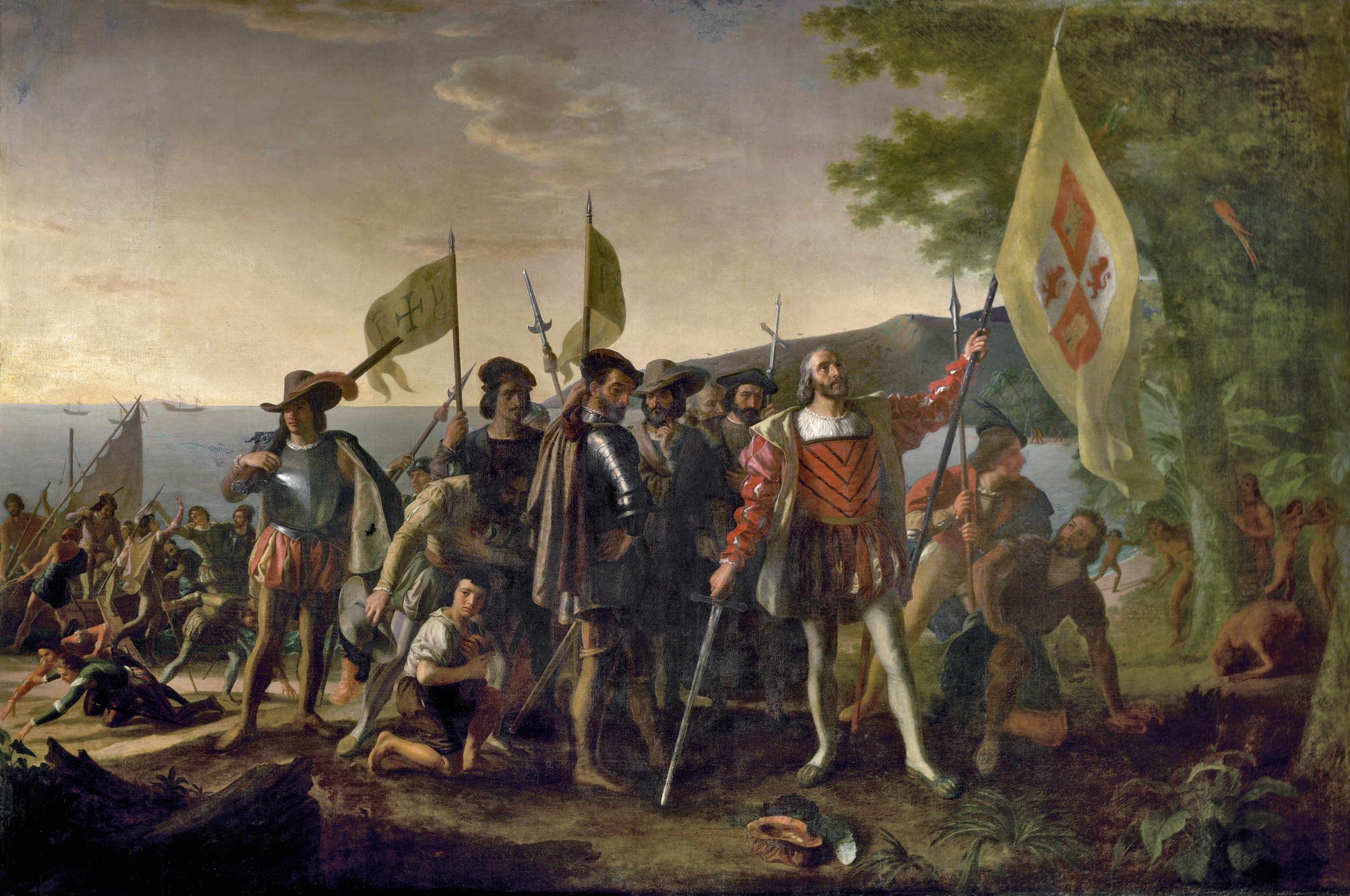
From Columbus and Pizarro onwards, fuelled by the tales of Marco Polo, the insatiable lust for gold was one of the key factors driving the exploration and eventual colonisation of the American continents.
The vast change that took place throughout the 15th to 17th century, and the eventual switch from gold to paper money in the 18th century, layed the foundations for the industrial revolution in Europe. In many ways the Faust story becomes a kind of symbol of this new Europe and the modern world. Faust embodies the European mindset of a culture emerging from the religious medieval world, and then gradually evolving into a science driven, capitalist, secular civilisation over the next five centuries. However, serving the new individualistic god of ‘progress’ unleashed the darker forces of greed, murder, exploitation and colonialisation, and Karl Marx compared this capitalist system, in very ‘Faustian’ terms, to being like -
“the sorcerer, who is no longer able to control the powers of the nether world whom he has called up by his spells.”
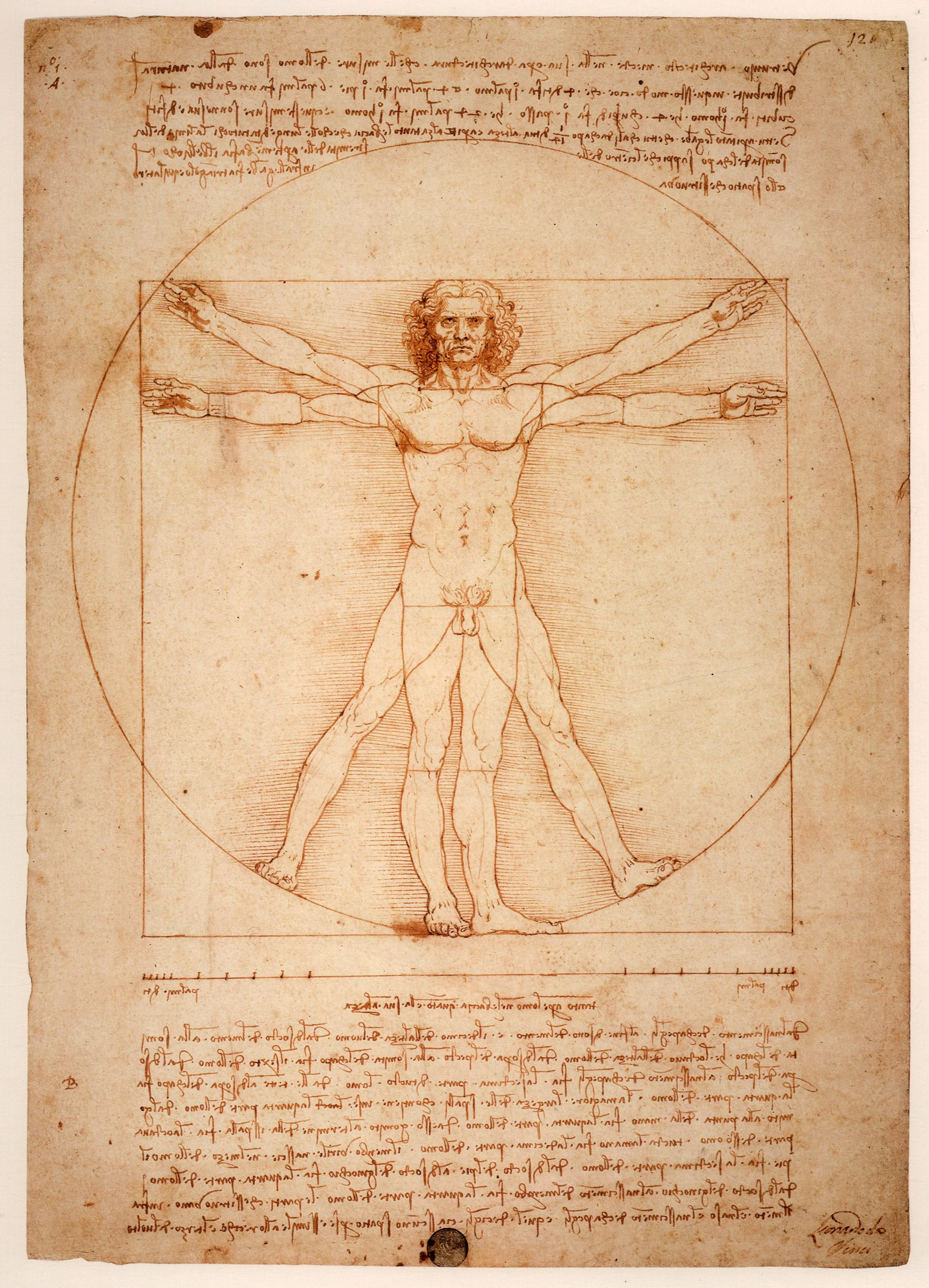

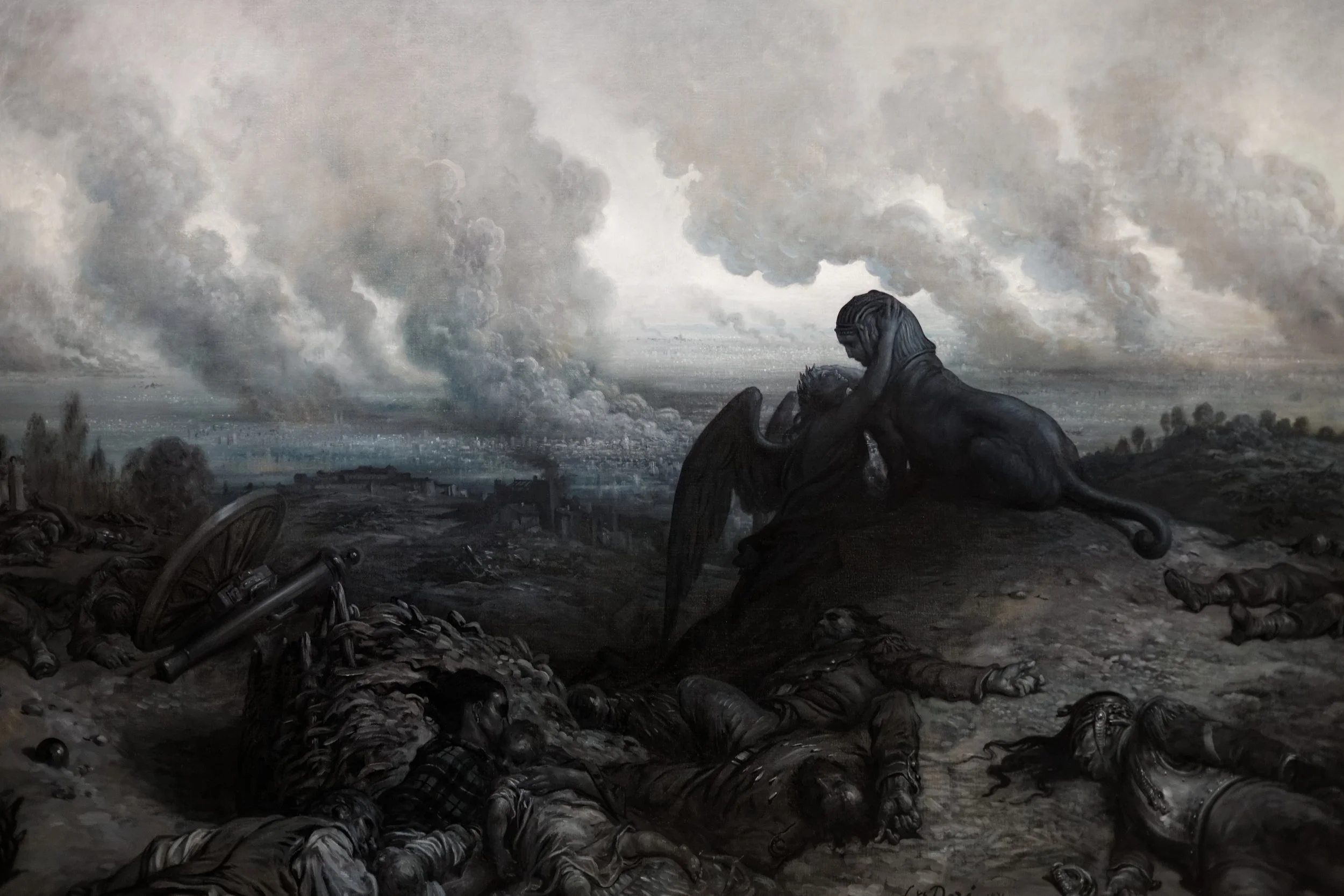
Following Marlowe, the second great retelling of the Faust myth is Johan Wolfgang Von Goethe’s epic two part play, which took the story a step further. In Goethes hands the play becomes a kind of critique of 19th century Enlightenment thinking. ‘
The ‘Enlightenment’ and the scientific revolution, which followed The Renaissance, was fuelled by the belief that ‘reason’ and the attainment of knowledge, would ultimately provide the solution to all of mankind’s problems. During this period there was a faster acceleration of the turning away from superstition and traditional institutions such as the church, towards the idea of the self reliant individual and the intellect. At the beginning of Goethe’s play, Faust finds himself in a state of utter despair. He has attained all the worldly knowledge a western education can provide, yet he feels completely empty, embodying the existential crisis of modern man, he is still unable to solve the mystery of human existence.
“For all our science and art we can know nothing, it burns my heart”
The 19th century novelist Tolstoy wrote in his essay ‘Confession’ that - "The only absolute knowledge attainable by man is that life is meaningless.” And it was the philosopher Nietzsche who famously stated - “God is dead”.
Much like Tolstoy and Nietzsche, Faust has reached the edge of knowledge and reason, and found only meaninglessness, and he finds himself staring into an empty abyss.
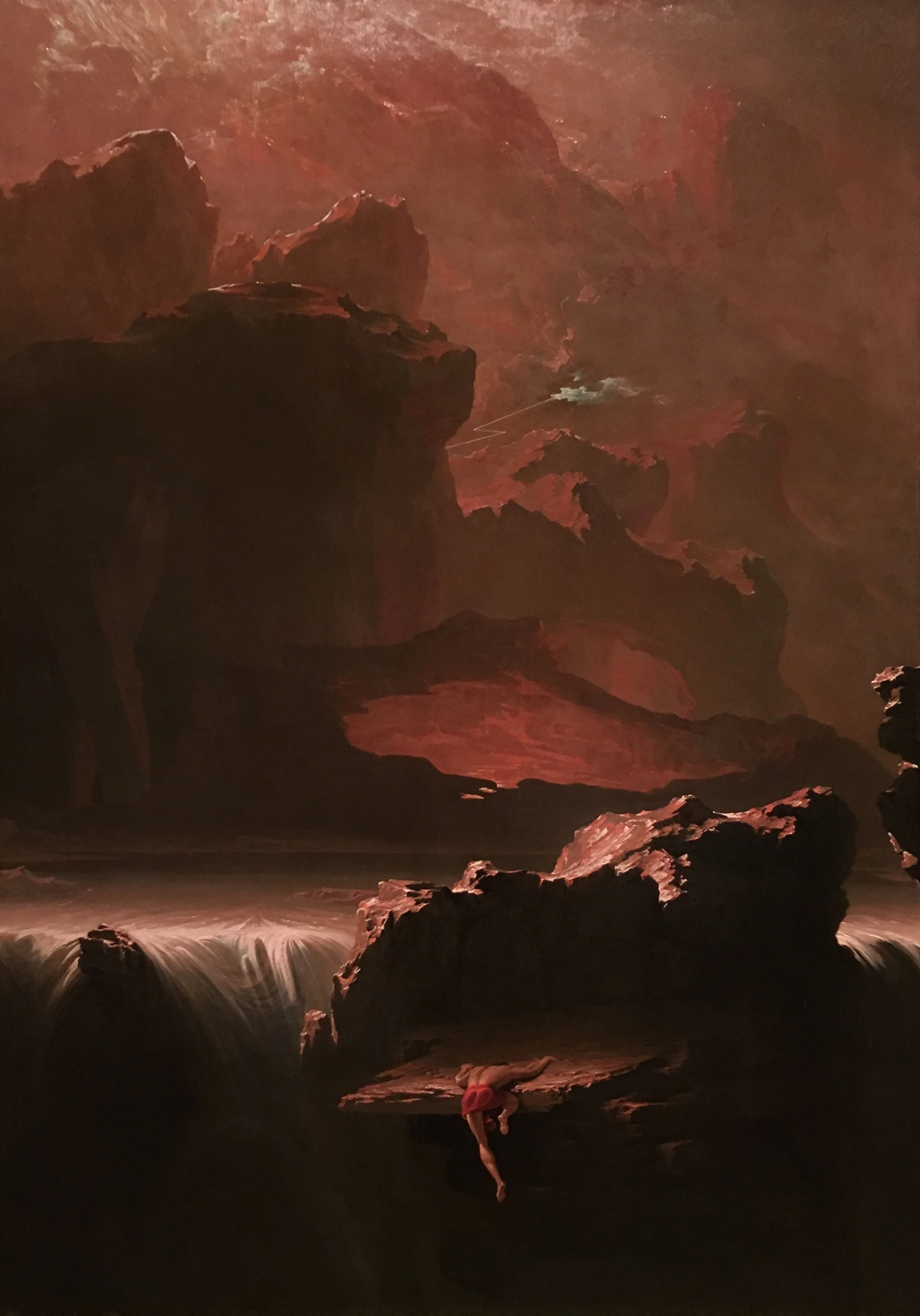
Goethe’s Faustian hero epitomises the classic ‘Enlightenment Man’ of early 19th century philosophy and culture. A figure that would go on to be explored by the Romantic movement and evolve into Nietzsche’s ‘godless’ Uber mensch or Superman- a learned individual who is fundamentally unsatisfied with the human condition, and seeks to solve this problem through some kind of drastic means, an embodiment of enlightenment mans constant and relentless striving for knowledge.

“My dear brothers, never forget, when you hear the progress of enlightenment vaunted, that the Devils best trick is to persuade you, that he doesn’t exist!”
- Charles Baudelaire, The Generous Gambler
In Goethe’s work Faust represents a society that attempts to become like god itself by using science and technology as a means of creating salvation for all, by focusing exclusively on the material world, and by coming to the conclusion that the miracle of life is reducible to mere matter and mechanical processes. Summing up the philosophy of the time, Faust expresses a desire to understand and tame the tyrannical forces of nature, whose untapped wildness fills him with unease and frustration -
“To grant me a vision of natures forces,
That bind the world, all its seeds and sources
And inner most life- all this I shall see
And stop peddling words that mean nothing to me”
And later on he remarks-
“Infinite nature, when can I lay hold of you and your breasts?”
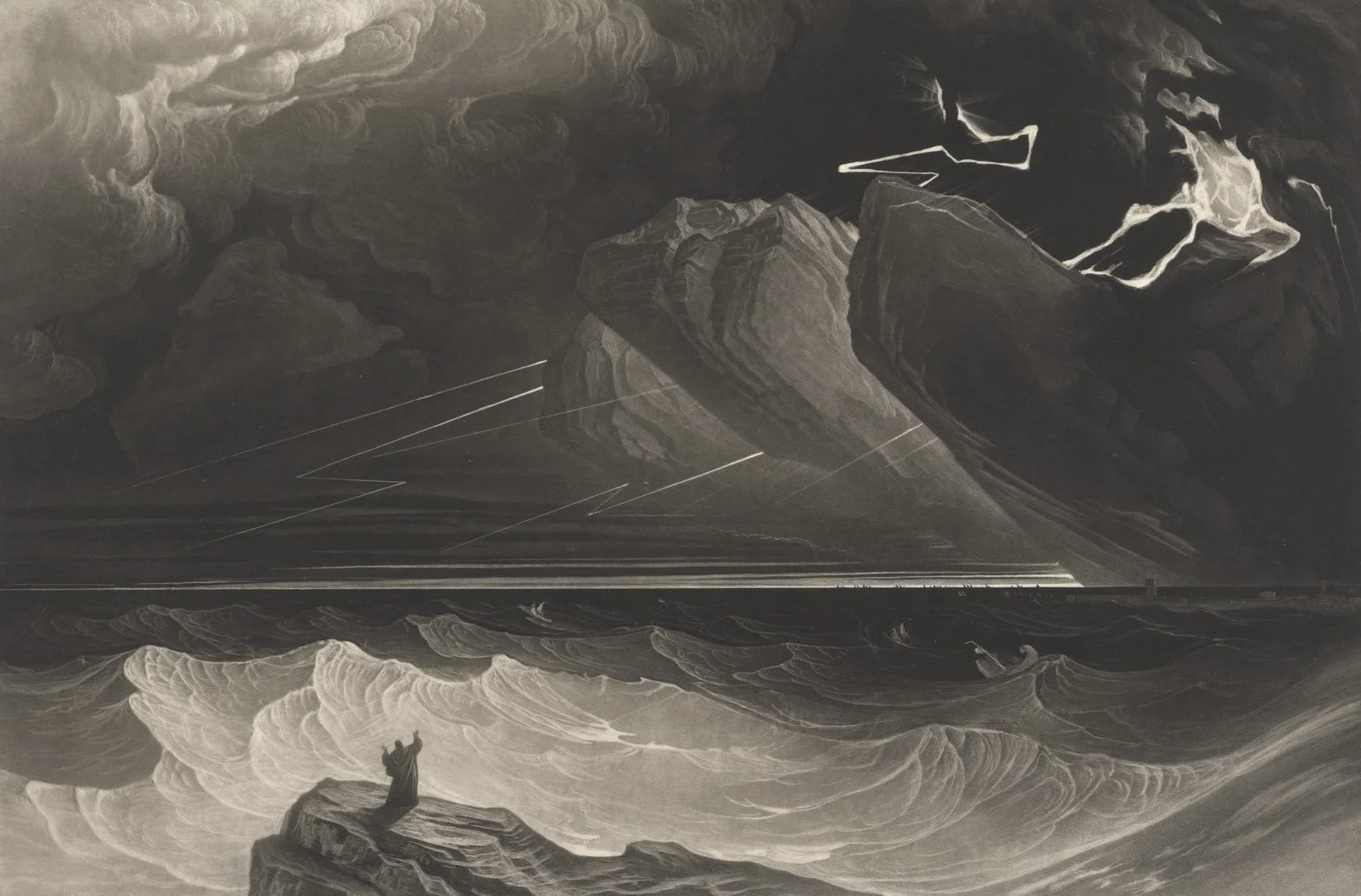
Despite his realisation that absolute knowledge can never lead to a final state of rest or happiness, Faust continues to relentlessly seek truth and knowledge even if he has to turn to black magic and sell his soul to do it. In Goethe’s Faust the bargain is that Mephistopheles will get Faust’s soul only if he ceases striving and finds contentment on earth. However Goethe’s version differs distinctly from Marlowe’s by allowing Faust to eventually have a happy ending. Goethe began the play in his 20s and took 60 years to write it, spanning most of his adult life, as a result it ended up being somewhat autobiographical.
In the end of Goethe’s play, Faust realises that the philosophy of ‘The Enlightenment’, which places the end goal of finding ‘truth’ through reason, as the key to salvation, is flawed. Ultimately the ‘final goal’ or ‘ultimate truth’ is never found, as human knowledge has no end point and always continues to evolve. Faust realises that it is in fact the ‘seeking and striving’ that is of value rather than the end goal. Truth is not something concrete or absolute, it may present itself in a temporary or fleeting glimpse through the battle of opposing forces, and it is perhaps in opposition and debate that some kind of truth may briefly emerge and then dissolve. In Goethes Faust mankind can find his place in the universe by celebrating and joining in the universes restless cosmic movement. Ultimately the journey is where the meaning lies , rather than the imagined final destination, and so with this realisation Faust wins the bet against Mephistopheles, and gets to keep his soul

“The artist has a twofold relation to nature, he is at once her master and her slave.”
-Goethe
Goethe’s Faust is a complex work and not a straightforward tragedy like Marlowe’s play. In Marlowe’s version we see a reflection of the authors primary interests, the consistent themes that appear throughout his plays, of people who are driven to excess and end up destroying themselves. However Goethes Faust, although it contains tragic events and suffering, ultimately contains a positive message- the idea that mankind may find fulfilment through fruitful and productive activity, and an acceptance of the laws of the universe and it’s restless nature. This is reflected in Goethes own pantheistic writings about nature -
“Nature is beneficient. I praise her and all her works. She is silent and wise. She is cunning, but for good ends she has brought me here and will also lead me away. She may scold me, but she will not hate her work. I trust her.”
He implies the need to recognise one’s own humility and human limitations, to find balance rather than trying to violently bend the world to your will, and to participate within the natural flow of nature -
“The older I get the more I trust in the law according to which the rose and the Lilly Bloom”
End of part one